Why do CargoWise Users Want Bill of Lading Automation to Reduce Costs and Scale Logistics Operations?
Every shipment tells a story, but in most logistics teams, that story starts with a document sitting in the team’s mailbox.
A Bill of Lading (BOL) arrives. The team downloads it, reads through it, copies details into CargoWise, double-checks fields, fixes errors, and passes it along. It sounds simple, but when you’re handling dozens, or even hundreds, of shipments a day, this process quietly eats up hours.
Now think about this: if each BOL takes even 10–15 minutes to process manually, that’s several hours lost every day just on document handling.
And that’s where the real issue begins.
CargoWise is designed to simplify operations, but if BOL processing is still manual, a critical part of your workflow is stuck in the past. That’s why more freight forwarders are shifting toward bill of lading automation, not just to save time but to reduce costs and scale operations without increasing workload.
What is Bill of Lading Automation in CargoWise?
A bill of lading is more than a shipping document. It acts as a contract, a receipt, and a key data source that drives the entire shipment lifecycle.
Inside CargoWise, BOL data feeds into:
- Shipment creation
- Consolidation processes
- Container tracking
- Invoice generation (BIL)
- Financial reporting
Automation transforms how this information enters the system.
Instead of manual input, key details are captured directly from the document, whether received via email or via integrated platforms, and accurately mapped into CargoWise.
This turns the document into structured data that flows through operations without constant human intervention.
Why is Manual CargoWise BOL Processing Costing You More?
Most teams are unaware of the cost of manual BOL processing because it is spread throughout daily operations.
But when you break it down, the impact is substantial.
First, there is the time expense. Teams spend hours entering and verifying data. This limits productivity and slows down overall processing speed.
Then comes the error cost. Even a small mistake in a BOL, like incorrect container details or consignee information, can lead to delays, rework, or compliance issues. Fixing these errors takes additional time and resources.
There’s also the compliance risk. Incorrect or incomplete BOL data can affect customs clearance, leading to penalties or shipment holds.
And finally, the financial impact. Since BOL data is directly tied to invoicing, delays in processing documents often delay invoice generation. That directly affects your cash flow.
The bigger problem? These costs grow as your shipment volume increases. Manual processes don’t scale; they multiply inefficiencies.
Why is a BOL Important in CargoWise Workflows?
In CargoWise, the Bill of Lading isn’t just another document; it’s a central piece of your operational and financial workflow.
It connects multiple processes, including:
- Order and shipment creation
- Consolidation and routing
- Container tracking
- Invoice and accrual generation
If BOL data is wrong or delayed, it affects everything downstream.
For example:
- A missing detail can delay shipment processing
- Incorrect data can impact container tracking
- Late updates can push invoicing further down the line
In short, the accuracy and speed of BOL processing have a direct impact on how efficiently your operations work.
CargoWise BOL Automation Workflow
BOL automation enhances existing workflows rather than replacing them.
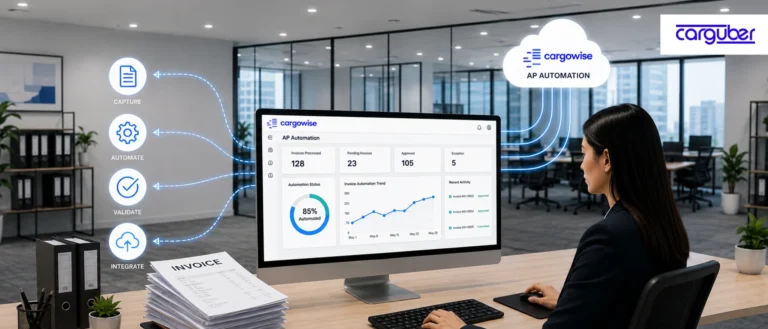
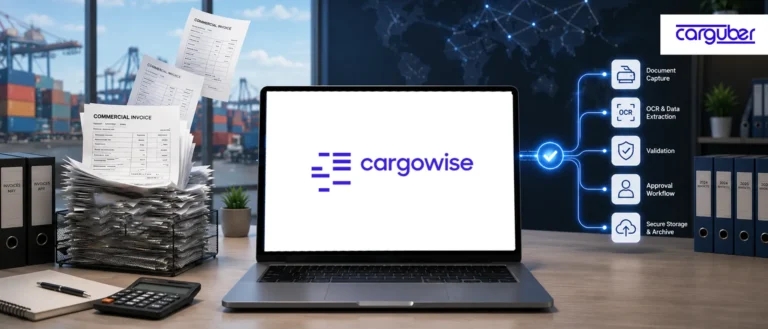
When a document is received, the Carguber’s AI document automation solution automatically extracts key data points such as shipper details, consignee details, container numbers, and charges.
This data is validated against CargoWise master data and shipment records. Any mismatches are flagged for review, ensuring accuracy without slowing the process.
Once verified, the data is mapped into relevant modules, orders, shipments, and consolidations without manual entry.
Workflows can then be automatically triggered. This could include creating invoices, updating shipment statuses, or informing teams about next steps.
The result is a smooth flow in which documents move through the system with minimal effort.
How does BOL Automation Reduce Operational Costs?
When CargoWise AI document automation replaces manual processing, the cost savings are obvious.
First, labor costs decrease as teams spend less time on repetitive tasks. Instead of entering data, they can focus on handling exceptions or performing more valuable tasks.
Second, costs associated with errors are reduced. Automated data capture reduces the number of incorrect entries, which means fewer delays and rework.
Third, processing speeds increase. Documents are processed faster, allowing shipments to move forward without unnecessary delays.
Finally, the compliance risk is reduced. Accurate and consistent data lowers the possibility of errors during customs clearance or audits.
In this case, cost reduction entails not only saving money but also increasing overall efficiency.
Scaling Operations Without Increasing Workload
One of the most significant logistical challenges is growth.
As shipment volumes grow, manual processes become more difficult to manage. Hiring more employees increases costs and complexity.
BOL automation changes this.
AI-automated document handling enables systems to process higher volumes without increasing manpower. Workflows remain consistent, regardless of scale.
It also helps standardize operations across teams and locations, ensuring the same level of efficiency everywhere.
Simply put, AI automation enables businesses to grow without putting a strain on their operations.
The Financial Impact: Faster Invoicing and Better Cash Flow
BOL automation has a direct impact on financial performance.
Because BOL data feeds into invoicing, faster processing equals faster billing. This shortens the order-to-cash cycle while increasing cash flow.
Accruals become more precise as they are based on validated data. This reduces discrepancies and enhances financial reporting.
Revenue leakage is reduced because proper data ensures accurate billing.
For finance teams, this means increased visibility and revenue control.
From Document Processing to Workflow Automation
The true value of BOL automation extends beyond document processing.
BOL data in CargoWise can trigger operations and finance workflows.
For example:
- A processed BOL can initiate shipment creation
- Validated data can trigger invoice preparation
- Updates can notify teams automatically
This makes the BOL an active component of the workflow rather than a static document.
Instead of manually handling each step, the system manages the entire process.
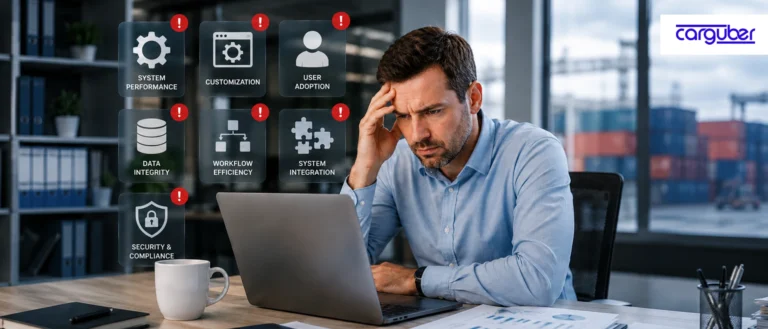
Common Challenges Without BOL Automation
Without AI automation, teams frequently encounter recurring issues:
- Heavy reliance on manual data entry
- Inconsistent or inaccurate information
- Delays in shipment processing
- Difficulty managing higher volumes
- Limited visibility across workflows
Even with CargoWise, these challenges remain if AI document automation is not implemented effectively.
How can You Get the Most Out of CargoWise BOL Automation?
To get the best results, a few key elements must be in place.
Accurate master data in CargoWise is critical. Without it, even automated processes may produce incorrect results.
Standardizing document formats enables systems to extract data more efficiently.
Workflows should be aligned with real-world operational processes to ensure that AI automation supports how teams work.
Exception management should also be used to focus attention where it is most needed, rather than reviewing every document.
When these factors come together, AI automation produces consistent and reliable results.
Conclusion
The Bill of Lading is the foundation of all shipments, but how it is handled determines operational efficiency. Manual processing raises costs, slows workflows, and reduces scalability. AI automation addresses this by transforming documents into structured data that flows seamlessly through CargoWise.
The goal for CargoWise users is not only to handle documents faster but also to eliminate all manual dependency. Because true efficiency does not result from doing more work. It comes from letting the system handle it. Schedule a free call with Carguber today and start automating your Bill of Lading processes to scale your logistics operations faster.