Why is CargoWise and Salesforce Integration Important for Modern Freight Operations?
Winning a new freight customer is only the beginning. The real challenge is moving customer, quotation, shipment, and service information accurately between sales and operations.
Sales teams often manage leads, opportunities, and quotations in Salesforce, while operations teams use CargoWise for jobs, shipments, milestones, and documents. When the systems are disconnected, teams rely on emails, spreadsheets, and repeated data entry, increasing delays and errors.
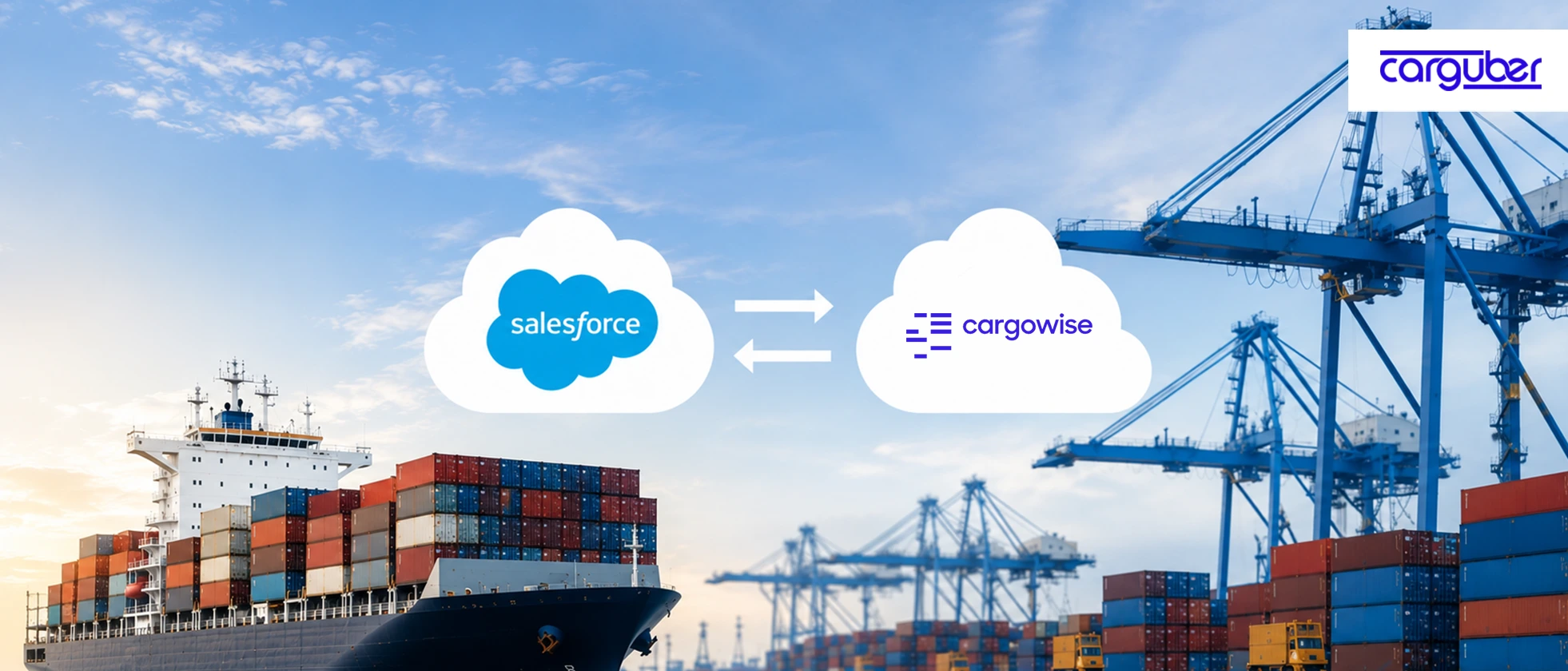
Salesforce and CargoWise integration creates a smoother flow of customer, quote, and shipment data across the business.
The Role of Salesforce and CargoWise in Customer and Shipment Management
Salesforce is commonly used to manage customer relationships, sales opportunities, account activity, communication, quotations, and pipeline visibility. Salesforce describes CRM as a system for managing interactions with current and potential customers, while its sales platform supports lead, opportunity, account, and forecasting processes.
CargoWise, on the other hand, supports logistics execution by helping freight teams manage operational data, automate workflows, reduce administration, and access shipment information in real time.
Both systems may contain information about the same customer, but each team uses that information differently.
Salesforce may contain:
- Lead and prospect information
- Customer contacts
- Sales opportunities
- Trade lanes and service requirements
- Quotation requests
- Pricing discussions
- Contract details
- Follow-up activities
CargoWise may contain:
- Customer and organization records
- Shipment and job details
- Booking information
- Cargo and routing data
- Operational milestones
- Billing information
- Shipment documents
- Delivery and exception updates
Without integration, teams may enter the same information in both platforms.
How does Disconnected Customer Data Affect CargoWise Freight Operations?
A customer record is not just a company name and email address.
For freight forwarders, it may include billing details, shipment preferences, service agreements, trade lanes, delivery requirements, credit information, contact roles, and communication history.
If Salesforce and CargoWise are not connected, problems can arise when:
- A new customer is created in Salesforce, but not added to CargoWise on time.
- Sales updates a customer address, but operations continue using an old record.
- Contact information differs between systems.
- Customer-specific shipment instructions are not transferred.
- Operations cannot see important sales discussions.
- Sales cannot see the latest shipment status.
- Duplicate customer records are created.
These issues may appear minor, but they affect customer onboarding, quotation accuracy, job setup, billing, and service delivery.
CargoWise Integration enables the controlled flow of customer information, ensuring that both systems receive the data necessary for their respective workflows.
How can Salesforce and CargoWise Integration Improve Quotation Workflows?
Freight quotations often depend on more than a simple selling price.
Sales teams may need to consider origin, destination, transport mode, cargo type, weight, dimensions, service level, carrier rates, local charges, customs requirements, validity dates, margins, and approval rules.
However, freight quotation data often needs to connect with operational and rate information in CargoWise.
Without integration, employees may manually
- Receive a quotation request in Salesforce.
- Re-enter customer and cargo information into CargoWise.
- Collect rates from operations or pricing teams.
- Return pricing information to Salesforce.
- Update the quote after internal approval.
- Re-enter the accepted quote when creating the shipment.
This creates multiple opportunities for delays and mistakes.
With a well-designed integration, selected quote information can move between Salesforce and CargoWise based on the company’s workflow.
This may include:
- Customer details
- Origin and destination
- Transport mode
- Cargo type
- Weight and dimensions
- Service requirements
- Quotation references
- Validity dates
- Pricing details
- Approval status
- Sales owner
- Customer acceptance
The purpose is not necessarily to make both systems perform the same function. It is to ensure that the right information reaches the right platform without repeated manual entry.
Connecting Accepted Quotes to Shipment Execution
One of the most valuable integration points is the transition from an accepted quotation to operational execution.
When a customer accepts a quote, sales teams may need to hand the opportunity over to operations. Without a connected workflow, the handover may happen through email, spreadsheets, chat messages, or manually prepared booking forms.
An integrated workflow may allow an accepted Salesforce opportunity or quote to trigger the next operational process.
Depending on the business design, this may support:
- Creating or updating the customer record
- Sending approved quote details to CargoWise
- Preparing a booking or shipment request
- Creating an operational task
- Notifying the correct branch or department
- Passing cargo and routing details
- Attaching supporting documents
- Preserving the original sales reference
The operations team can then review and complete the shipment setup using validated information rather than beginning the process again.
How does CargoWise Shipment Data Improve Sales Visibility and Customer Service?
Customer communication does not end after a quotation is accepted.
Customers often contact their sales representative for shipment status, delays, document updates, or delivery information. If Salesforce does not receive operational updates from CargoWise, sales teams may need to ask operations for every answer.
This creates unnecessary internal communication and slows customer response.
Salesforce and CargoWise integration can make selected shipment information available to sales and customer service teams.
This may include:
- Shipment reference
- Origin and destination
- Transport mode
- Booking status
- Estimated departure and arrival
- Actual departure and arrival
- Operational milestones
- Delivery status
- Exception alerts
- Document availability
CargoWise emphasizes real-time access to data so users can respond sooner and reduce operational risk.
When relevant CargoWise updates are visible in Salesforce, sales teams can respond with more accurate information without needing full access to every operational screen.
A connected customer journey gives sales, customer service, and operations teams better context.
Sales teams can understand whether a customer’s shipments are running smoothly. Operations teams can see important customer requirements. Customer service teams can review both communication history and operational status.
This can help logistics companies:
- Reduce repeated internal follow-ups
- Improve customer response time
- Maintain consistent customer records
- Provide more accurate shipment updates
- Improve sales-to-operations handover
- Reduce quotation and booking errors
- Preserve customer preferences
- Improve account reviews
- Identify service problems earlier
The benefit is not only faster data exchange. It is a more coordinated customer experience from the first sales conversation through shipment delivery.
What Data should Move Between Salesforce and CargoWise?
Not every Salesforce field should be copied into CargoWise, and not every CargoWise record should appear in Salesforce.
A successful CargoWise integration necessitates clear data ownership. In addition, logistics knowledge and platform understanding are required.
The business should decide:
- Which system owns the customer master record
- Where new accounts should be created
- Which system controls quotation status
- Where freight rates are managed
- Which shipment milestones should appear in Salesforce
- How duplicate records will be prevented
- How updates will be approved
- Which users can change sensitive information
- How integration errors will be handled
Common integration data may include:
From Salesforce to CargoWise
- Customer and contact information
- Opportunity or quote reference
- Service requirements
- Cargo details
- Trade lane information
- Accepted quote details
- Special customer instructions
From CargoWise to Salesforce
- Shipment or job reference
- Booking confirmation
- Operational status
- Milestone updates
- Estimated and actual dates
- Delivery status
- Exception information
- Customer shipment history
The correct design depends on how the company manages sales, pricing, operations, finance, and customer service.
How can Carguber integrate Salesforce and CargoWise?
Carguber helps freight forwarders and logistics companies connect Salesforce with CargoWise based on their customer, quotation, and shipment workflows.
The integration service can support:
- Salesforce and CargoWise requirement analysis
- Customer and contact synchronization
- Lead and opportunity workflow mapping
- Quotation data integration
- Sales-to-operations handover
- Booking and shipment workflow integration
- CargoWise milestone updates in Salesforce
- Exception and notification workflows
- API, EDI, middleware, and eAdaptor connectivity
- Integration testing and monitoring
- Ongoing workflow optimization
Carguber’s capabilities extend beyond Salesforce and CargoWise. Our integration expertise also extends to in-house ERPs, finance platforms, WMS, TMS, customer portals, BI solutions, carrier systems, and other logistics applications.
Our integration strategy focuses on connecting logistics systems so that customer, sales, operational, and financial data can flow across departments without requiring manual intervention.
Conclusion
Salesforce manages the customer and sales journey, while CargoWise manages critical freight execution workflows.
When these platforms operate separately, logistics teams may face duplicate data entry, delayed quotation handovers, inconsistent customer information, limited shipment visibility, and slower customer communication.
Schedule a free consultation with us today and connect your Salesforce and CargoWise workflows with confidence.