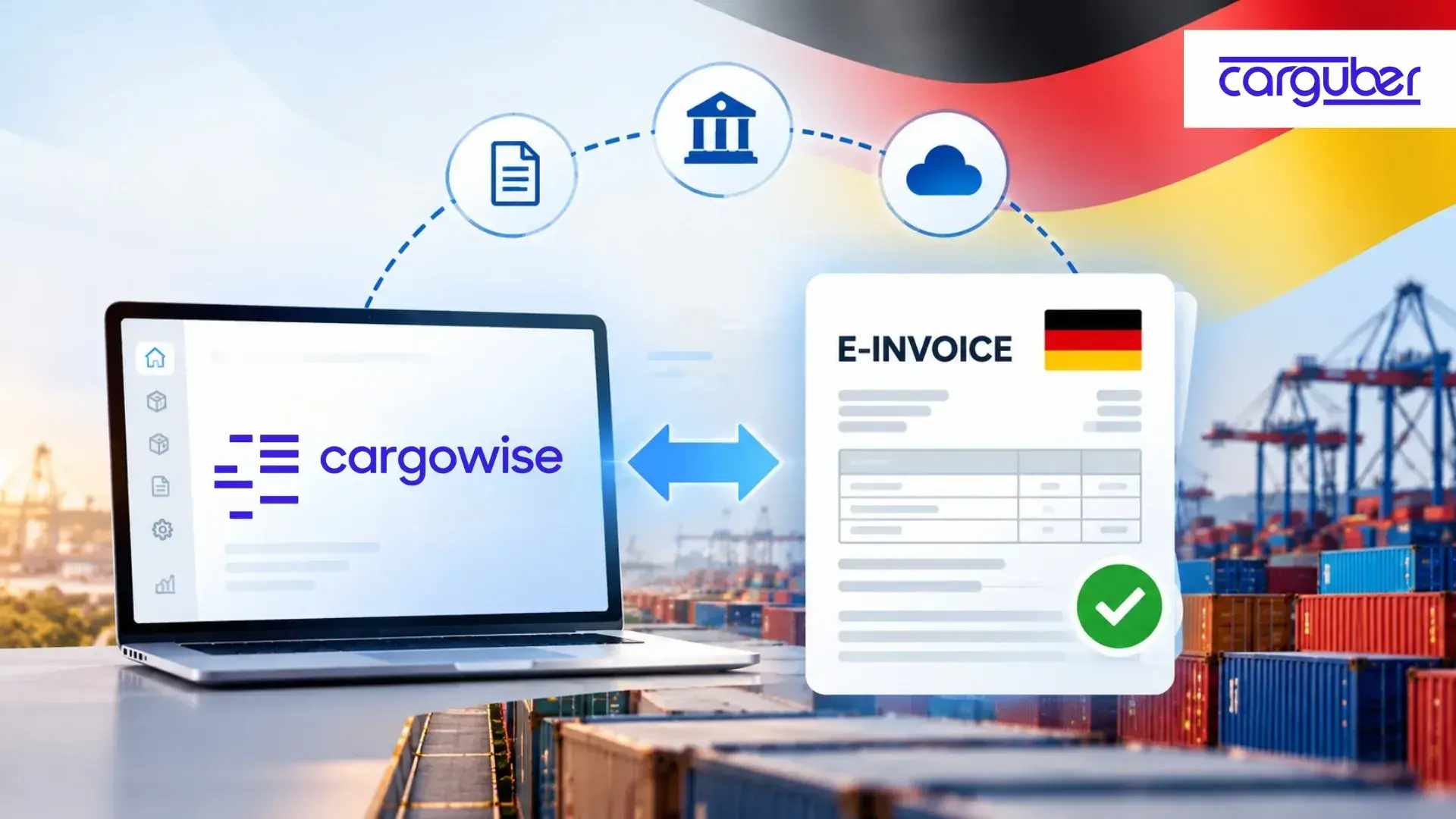
Germany’s Mandatory E-Invoicing: How can CargoWise Users Prepare Before the 2027 and 2028 Deadlines?
Germany’s mandatory e-invoicing requirements are transforming how businesses create, exchange, and process invoices. While the changes apply across many industries, they are particularly significant for freight forwarders, customs brokers, and logistics companies that handle large volumes of invoices linked to shipments, customs declarations, warehousing, transportation, and value-added logistics services.
For CargoWise users, these changes extend beyond regulatory compliance. They affect how billing data is generated, validated, exchanged, and integrated with accounting systems. Businesses that continue relying on PDF invoices, manual processing, or disconnected financial workflows may face increasing administrative effort as the e-invoicing mandatory deadlines approach.
Preparing early gives logistics companies the opportunity to review existing invoicing processes, modernize financial workflows, and reduce manual work before the transition becomes mandatory.
This is where CargoWise integration plays an important role. By connecting CargoWise with compliant electronic invoicing solutions, businesses can streamline invoice processing, improve financial accuracy, and support Germany’s structured e-invoicing requirements.
What is Germany’s Mandatory E-Invoicing Requirement?
Germany introduced mandatory electronic invoicing through the Growth Opportunities Act (Wachstumschancengesetz), bringing significant changes to domestic B2B invoicing.
Unlike traditional invoices, a compliant electronic invoice is not simply a PDF attached to an email. It must contain structured, machine-readable data that allows accounting and ERP systems to process invoice information automatically.
The objective is to:
- Reduce manual invoice processing
- Improve invoice accuracy
- Standardize invoice exchange
- Support automated financial workflows
- Improve tax and financial reporting
For logistics companies, this means shipment-related billing information must be generated in a structured format that both the sender and the recipient can process electronically.
Germany’s E-Invoicing Timeline: What Businesses Need to Know
Germany is implementing mandatory e-invoicing through a phased transition, giving businesses time to prepare their financial systems.
1 January 2025 – Receiving Electronic Invoices
Businesses established in Germany are generally required to be able to receive structured electronic invoices.
Although many companies may still issue invoices using existing methods during the transition period, receiving compliant electronic invoices has already become an important requirement.
2025–2026 – Transition Period
During this period, businesses can generally continue issuing invoices using existing formats under the applicable transitional rules.
However, this period should be viewed as an opportunity to modernize invoicing processes rather than waiting until the final deadlines.
1 January 2027 – Mandatory Issuing for Larger Businesses
Businesses with annual turnover above the applicable threshold generally become subject to mandatory structured electronic invoicing for qualifying domestic B2B transactions.
Companies that wait until this deadline may face unnecessary implementation pressure.
1 January 2028 – Full Implementation
The broader transition period concludes, making structured electronic invoicing the standard approach for qualifying domestic B2B transactions, subject to the applicable legal exceptions.
For CargoWise users, these milestones highlight the importance of reviewing billing workflows, financial integrations, and invoice processing well before the mandatory deadlines arrive.
Understanding XRechnung and ZUGFeRD
Germany primarily recognizes two structured electronic invoice formats that comply with the European standard EN 16931.
Although both support electronic invoicing, they serve different business needs.
XRechnung
XRechnung is a structured XML invoice designed specifically for automated system-to-system processing.
Instead of creating a document for people to read, it creates data that accounting systems can validate and process automatically.
It is widely used across Germany and forms an important part of the country’s electronic invoicing framework.
ZUGFeRD
ZUGFeRD combines two formats within a single invoice.
It includes:
- A human-readable PDF
- Embedded structured XML invoice data
This allows finance teams to read the invoice while accounting systems process the structured data automatically.
Depending on customer requirements, industry practices, and system capabilities, businesses may need to support one or both formats.
Why do Germany’s E-Invoicing Changes Matter to CargoWise Users?
Freight forwarding invoices are rarely simple.
A single shipment can include multiple charges covering transportation, customs clearance, warehousing, terminal handling, documentation, insurance, storage, and other logistics services.
Each invoice may also involve:
- Multiple suppliers
- Different currencies
- Various tax treatments
- Customer-specific billing rules
- Shipment references
- Purchase orders
- Job numbers
- Cost allocations
Managing this information manually becomes increasingly difficult as invoice volumes grow.
Many logistics businesses still depend on PDF invoices, spreadsheets, manual approvals, and disconnected accounting systems. These processes often create unnecessary administrative work and increase the likelihood of errors.
Common challenges include:
- Re-entering invoice information into multiple systems
- Incorrect customer or supplier information
- Missing VAT details
- Incorrect tax calculations
- Invoice validation errors
- Delayed invoice approvals
- Manual reconciliation between CargoWise and accounting software
- Limited visibility into invoice status
As Germany’s mandatory e-invoicing requirements become more widely applicable, businesses will need more structured, automated invoice processing rather than relying on manual document handling.
How can CargoWise Integration Help Meet Germany’s E-Invoicing Requirements?
CargoWise already manages many of the financial processes used by freight forwarders, including customer billing, supplier costs, accounts receivable, accounts payable, shipment costing, and financial reporting. However, meeting Germany’s structured e-invoicing requirements may require additional CargoWise configuration and integration with compliant e-invoicing solutions.
Instead of creating invoices separately, businesses can use CargoWise as the central source of financial data while integrating it with electronic invoicing platforms that support Germany’s requirements.
Generate Structured Electronic Invoices
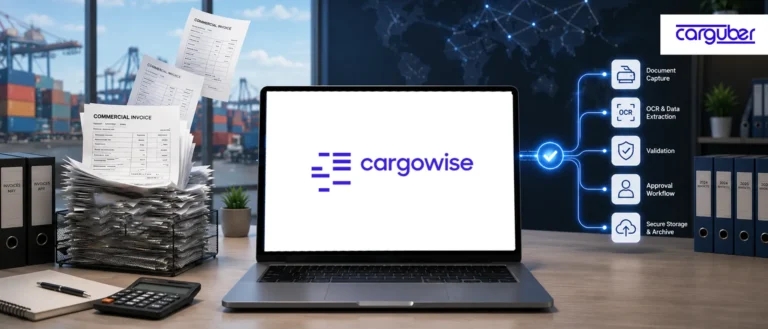
One of the biggest advantages of integration is the ability to transform CargoWise invoice data into structured electronic invoice formats such as XRechnung and ZUGFeRD.
Rather than manually recreating invoice data, businesses can use information already stored within CargoWise to produce compliant electronic invoices. This reduces duplicate work, improves consistency, and minimizes manual errors.
Improve Invoice Validation
Accurate invoice data is essential for successful electronic invoice processing.
A well-configured integration can help validate important information before invoices are exchanged, including:
- Customer and supplier details
- Invoice numbers and dates
- VAT information
- Tax codes
- Currency values
- Invoice totals
- Mandatory invoice fields
Identifying missing or incorrect information before sending an invoice helps reduce rejections, delays, and unnecessary corrections.
Support Accounts Payable and Accounts Receivable
Germany’s e-invoicing requirements affect both outgoing and incoming invoices.
For many logistics companies, supplier invoices also need to be reviewed, matched with shipment costs, and processed efficiently.
CargoWise integration can help finance teams work with structured supplier invoice data more efficiently while supporting accounts payable and accounts receivable workflows. Instead of manually entering invoice information into multiple systems, teams can review, validate, and process data within a more connected financial workflow.
Reduce Manual Financial Processes
Manual invoice processing often creates repetitive administrative work.
Finance teams may spend hours downloading invoices, checking shipment references, matching purchase orders, validating charges, and updating accounting systems.
Integrating CargoWise with financial and e-invoicing platforms helps reduce repetitive activities by allowing financial data to move between connected systems in a more structured manner.
This improves productivity while giving finance teams more time to focus on invoice exceptions, financial analysis, and customer support.
Benefits of Preparing Early for Germany’s E-Invoicing Deadline
Waiting until the mandatory deadlines approach can place unnecessary pressure on finance and IT teams.
Preparing early gives businesses time to review existing processes, identify integration gaps, and test electronic invoicing workflows before structured invoices become mandatory.
Early preparation can help businesses:
- Reduce manual invoice processing
- Improve invoice accuracy
- Standardize financial workflows
- Strengthen financial visibility
- Improve billing efficiency
- Support faster invoice approvals
- Reduce reconciliation effort
- Prepare CargoWise for future regulatory changes
Instead of treating e-invoicing as a compliance exercise, businesses can use the transition to modernize their finance operations and improve overall efficiency.
Why choose Carguber for CargoWise Germany E-Invoicing Integration?
Preparing CargoWise for Germany’s mandatory e-invoicing requirements involves more than generating XML invoices. It requires the right configuration, financial data mapping, system connectivity, and ongoing support to ensure invoicing workflows operate efficiently.
Carguber helps freight forwarders and logistics companies integrate CargoWise with financial applications and compliant e-invoicing solutions.
Our services include:
- CargoWise e-invoicing integration
- Financial system integration
- XRechnung and ZUGFeRD workflow support
- API and eAdaptor Next integration
- CargoWise billing and accounting configuration
- Invoice validation workflows
- Accounts payable and receivable integration
- Workflow automation
- Ongoing CargoWise support and helpdesk
Our goal is to help businesses reduce manual finance processes, improve invoice accuracy, streamline financial operations, and maximize the value of their CargoWise environment.
Final Thoughts
Germany’s mandatory e-invoicing requirements represent a significant shift in how businesses exchange financial information. For CargoWise users, preparing early means more than meeting regulatory deadlines; it is an opportunity to modernize invoicing, reduce manual work, and improve financial efficiency.
By integrating CargoWise with compliant e-invoicing solutions, logistics companies can automate invoice processing, improve data accuracy, strengthen financial visibility, and support smoother billing workflows.
Whether your business is preparing for the 2027 or 2028 requirements, reviewing your CargoWise billing and financial processes today can make the transition much easier.
Schedule a free consultation with Carguber today to discover how we can help you integrate, configure, and optimize CargoWise for Germany’s mandatory e-invoicing requirements.