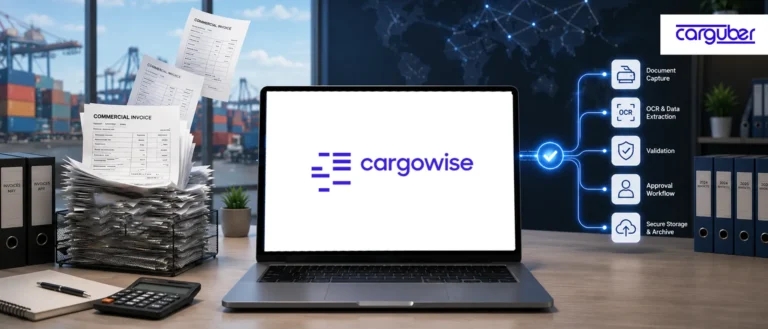
Top 10 UK Customs Clearance Systems: Why do Freight Forwarders Need to Integrate with CargoWise?
Customs is more than just paperwork; it is about ensuring that every shipment detail is correct so that cargo can be released on time. In today’s UK customs landscape, digital processes, stricter regulations, and automated validation have transformed freight forwarders’ operations. Even minor errors in HS codes, valuations, or supporting documents can result in rejections of declarations, cargo delays, and financial penalties. Customs is no longer a back-office function; it is an integral part of daily operations, with a direct impact on shipment timeliness, compliance, and customer satisfaction.
Forwarders require interconnected systems, real-time validation, and simplified operations. Integration with platforms like CargoWise is not only helpful; it’s also necessary for operational efficiency and compliance.
The UK Customs Landscape in 2026
By 2026, the UK customs environment will be fully digital, highly regulated, and powered by structured data through the Customs Declaration Service (CDS). The shift from manual processes to automated electronic submissions has emphasized the importance of data accuracy, system integration, and compliance governance.
Key developments shaping the UK customs landscape include the following:
- CDS Completely Replaces CHIEF: The legacy CHIEF system has been phased out, and CDS now includes more granular data elements, structured formatting requirements, and stricter validation rules.
- Enhanced Automated Validation: CDS performs real-time data checks during submission, rejecting declarations with missing, inconsistent, or improperly formatted fields.
- Mandatory Digital Submissions: All import and export declarations must be sent electronically through approved customs platforms, eliminating the need for manual or paper filing.
- Increased Audit Transparency: HMRC anticipates detailed digital audit trails linking shipment records, customs declarations, and financial transactions.
In this environment, freight forwarders must maintain high levels of operational discipline and data governance.
- Accurate HS code classification
- Correct valuation and duty calculation
- Proper digital document referencing
- Timely electronic submission
- Real-time monitoring of declaration status
Without integrated systems, even minor differences between shipment data and submitted customs declarations can have serious consequences, such as CDS rejections, cargo delays, financial penalties, or audit exposure.
Top 10 UK Customs Clearance Systems
1. ASM Sequoia
ASM Sequoia is one of the most well-established and widely used customs declaration platforms in the UK. It is widely used by customs brokers and freight forwarders who handle large volumes of CDS import and export transactions on a daily basis. The system is built for dependability, structured data handling, and regulatory compliance.
- CDS-Optimized Declaration Engine: Fully aligned with the UK Customs Declaration Service requirements, allowing for structured submissions with built-in validation checks to reduce errors and rejection rates.
- High-Volume Processing Capability: Designed to handle large transaction volumes efficiently, making it ideal for brokerage firms that process hundreds or thousands of entries per day.
- Compliance-Driven Data Validation: Embedded logic ensures that commodity codes, customs procedure codes, and valuation data are properly structured before submission.
Operational Reliability: Recognized for system stability and consistent performance in mission-critical customs settings.
2. Descartes Systems
Descartes Systems offers a global trade compliance ecosystem, which includes UK customs filing functionality. It works within a larger international trade management framework, assisting multinational corporations that need centralized control across multiple countries.
- Global Customs Coverage: Allows for multi-country declaration management via a centralized platform.
- Integrated Compliance Controls: Includes customs filing, denied party screening, regulatory checks, and documentation management.
- Enterprise Scalability: Suitable for multinational organizations that manage complex trade flows.
- Centralized Visibility: Provides oversight of customs activity across regions, enhancing governance and audit readiness.
3. Descartes Thyme-IT
Descartes Thyme-IT is a UK-focused customs declaration solution designed specifically to meet the operational needs of freight forwarders and customs brokers who handle CDS submissions on a daily basis. It combines regulatory compliance with practical usability, making it ideal for businesses that need consistent and efficient declaration processing.
- CDS-ready Submission Workflows: Designed to meet the UK Customs Declaration Service requirements, allowing for structured electronic submissions with proper data formatting and validation logic.
- UK Regulatory Alignment: Consistently updated to reflect HMRC regulations, tariff changes, and procedural requirements.
- Practical Operational Interface: Created with freight forwarding teams in mind, featuring user-friendly screens and logical data entry flows.
- Daily Customs Processing: Optimized for routine import and export declarations while maintaining accuracy.
4. DataFreight
DataFreight specializes in structured customs declaration processing, with direct CDS connectivity. It is typically used by UK freight forwarders who need a dedicated customs filing platform that balances compliance with operational efficiency.
- Direct CDS Integration: Facilitates electronic submission of import and export declarations via structured connectivity.
- Simplified Data Preparation: Declaration creation is made easier with guided data entry and validation tools.
- Error-Reduction Controls: Built-in checks prevent manual errors before submission.
- Operational Efficiency: Enables consistent daily declaration processing without complex enterprise overhead.
5. AEB Import/Export Filing
AEB Import/Export Filing is a customs platform that focuses on compliance and meets both UK and EU requirements. It prioritizes governance, audit control, and regulatory compliance.
- Automated Compliance Validation: Verifies tariff codes, origin data, and regulatory requirements before submitting.
- Multi-Region Customs Support: Manages UK and EU processes through a unified compliance framework.
- Risk Mitigation: The risk mitigation framework reduces the likelihood of penalties through systematic validation.
6. MIC-CUST
MIC-CUST is an enterprise-grade customs and trade compliance automation platform designed for multinational corporations managing global trade operations.
- Enterprise Customs Automation: Supports high-volume, multi-country customs operations with structured workflows.
- Centralized Compliance Governance: Provides standardized processes across subsidiaries and regions.
- Advanced Reporting Capabilities: Enable detailed compliance reporting and management dashboards.
- Scalable Infrastructure: Suitable for organizations with complex global supply chains.
7. MultiFreight
MultiFreight provides UK-focused customs declaration software tailored to freight forwarders and logistics providers who file CDS on a regular basis. Its CDS-compliant submission structure enables accurate import and export declaration processing.
- Designed for Logistics Workflows: Meets freight forwarding operational requirements.
- Efficient Daily Processing: Enables consistent handling of recurring transaction volumes.
- Regulatory Update Support: Adjusts to changes in UK customs rules to ensure compliance.
8. CCS-UK
CCS-UK functions as a Community System Provider, facilitating secure electronic messaging between HMRC, ports, terminals, and logistics stakeholders.
- Electronic Data Exchange Platform: Enables structured digital messaging between customs authorities and port operators.
- Port Community Connectivity: Connects freight forwarders, carriers, and terminals within a shared ecosystem.
- Regulatory Messaging Compliance: Ensures message formats align with HMRC standards.
- Infrastructure Support: Acts as a digital bridge between operational stakeholders.
9. iCustoms
iCustoms provides digital customs declaration solutions with automation features that simplify UK customs processing.
- Automated Declaration Workflows: Use structured data capture and validation tools to reduce the need for manual intervention.
- User-Friendly Submission Interface: Simplifies the filing process for operational teams.
- Compliance-Driven Structure: Adheres to CDS requirements to ensure regulatory accuracy.
- Efficiency-Focused Design: Allows for faster declaration turnaround and reduced administrative workload.
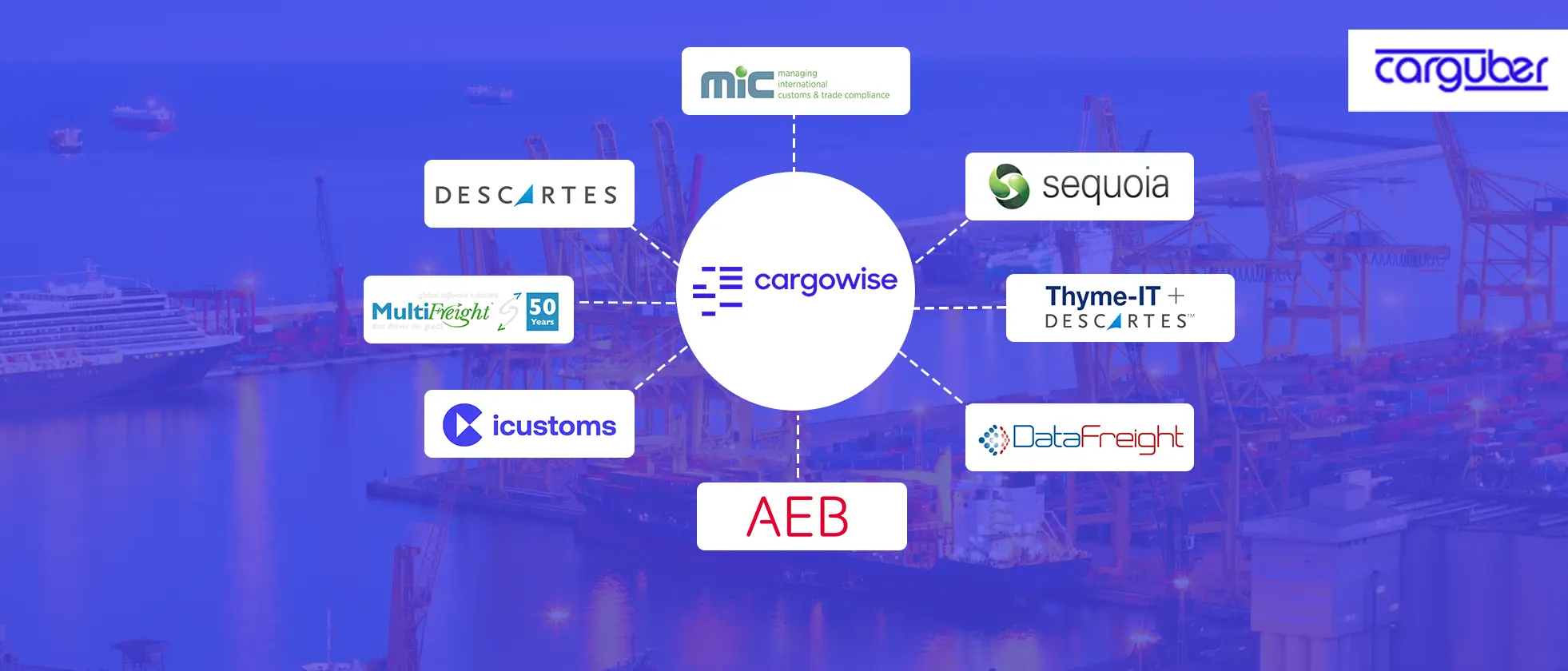
While these systems may support CDS-compliant filing, true long-term efficiency is determined by how well customs processes integrate with shipment management, finance, warehousing, and reporting. However, complete system integration is what ultimately enables scalability, end-to-end visibility, and long-term compliance.
Why is Carguber’s Expertise Important for UK Customs Integration?
In today’s evolving UK customs environment, successful integration between operational platforms and customs systems requires more than technical setup. It demands deep expertise in CargoWise workflows, CDS data structures, compliance rules, and financial alignment.
Carguber ensures accurate integration of CargoWise with customs systems, including correct HS codes, procedure codes, valuation elements, and document references.
- API and EDI Integration: We provide secure real-time or batch connectivity between forwarding systems and third-party customs platforms, complete with proper testing and error handling.
- Financial Synchronization: We ensure that duties, VAT, and disbursements are automatically aligned with finance modules, reducing reconciliation effort and increasing audit readiness.
- Workflow Optimization: We ensure that customs status updates are embedded in shipment records, giving teams real-time visibility without switching systems.
Our approach ensures that customs operations are compliant, scalable, automated, and seamlessly integrated into end-to-end logistics workflows.
Impact of Integration: Standalone vs Integrated with CargoWise
This comparison highlights how integration transforms customs from a disconnected process into a simplified, visible, and scalable part of daily freight forwarding operations.
| Factor | Standalone System | Integrated with CargoWise |
| Data Accuracy | Higher error risk | Consistent data flow |
| Duplicate Work | Repeated data entry | Single data source |
| Visibility | Separate tracking | In-shipment visibility |
| CDS Rejections | Higher rejection | Reduced via validation |
| Financial Posting | Manual reconciliation | Auto-synced finance |
| Processing Speed | Slower | Faster declaration |
| Compliance Control | Data mismatch risk | Aligned records |
| Scalability | Manual growth limits | Automation-driven scale |
| Reporting | Disconnected reports | Unified reporting |
| Workflow Efficiency | Distinct process | Integrated workflow |
Conclusion
Compliance regulations are stricter, and customs systems are more sophisticated. If your operational data and declarations do not match exactly, discrepancies will be detected immediately. That is why system integration, clean master data, and real-time visibility are no longer options; they are operational requirements. Forwarders with connected platforms and strong process control will clear cargo more quickly and with fewer disruptions, whereas manual workarounds will only increase risk.
Do not wait for the next delay or compliance issue. Book a free consultation call with Carguber today to ensure your UK customs integration runs smoothly and accurately from the start.