How does CargoWise Rail Freight Integration Simplify Multimodal Logistics Planning?
For many years, road transportation dominated inland freight planning because it seemed faster, simpler, and easier to manage.
Rail was often viewed differently.
Too many systems. Too much coordination. Limited visibility. Difficult planning.
However, logistics operations are rapidly changing. Rising transportation costs, tighter delivery expectations, environmental concerns, and network congestion are prompting freight forwarders to reconsider how they transport cargo inland. This is where CargoWise rail freight integration is revolutionizing the game.
Instead of treating rail as a separate mode of transportation, CargoWise enables logistics teams to incorporate rail directly into their daily workflow, improving multimodal planning’s connectivity, visibility, and operational efficiency.
The Growing Pressure on Inland Logistics
Inland transportation has emerged as one of the most significant operational challenges in global logistics.
Freight forwarders today deal with:
- Increasing fuel costs
- Driver shortages
- Port congestion
- Delivery delays
- Capacity limitations on road networks
- Global tension
Relying solely on road transportation is no longer the most efficient strategy for long-distance moves.
Rail freight offers a practical alternative, especially for high-volume inland transportation. The difficulty of incorporating rail into daily operations was never a concern.
CargoWise helps solve this issue by integrating rail freight into a single connected workflow.
CargoWise Integrates Rail Freight Operations Into One Connected Workflow
Traditionally, rail reservations and planning occurred outside of the main logistics system.
Teams needed to:
- Use separate portals
- Request schedules manually
- Compare rates across different systems
- Coordinate rail timelines independently
This slowed planning and created visibility gaps along the shipment route.
Rail freight integration within CargoWise allows logistics teams to manage rail movements from the same platform they use for air, sea, and road freight.
That means:
- Rail schedules become visible in real time
- Route comparisons become faster
- Bookings can be managed centrally
- Shipment planning becomes more unified
Instead of switching between disconnected systems, operations teams can manage everything in a single environment.
Creating Better Multimodal Logistics Strategies
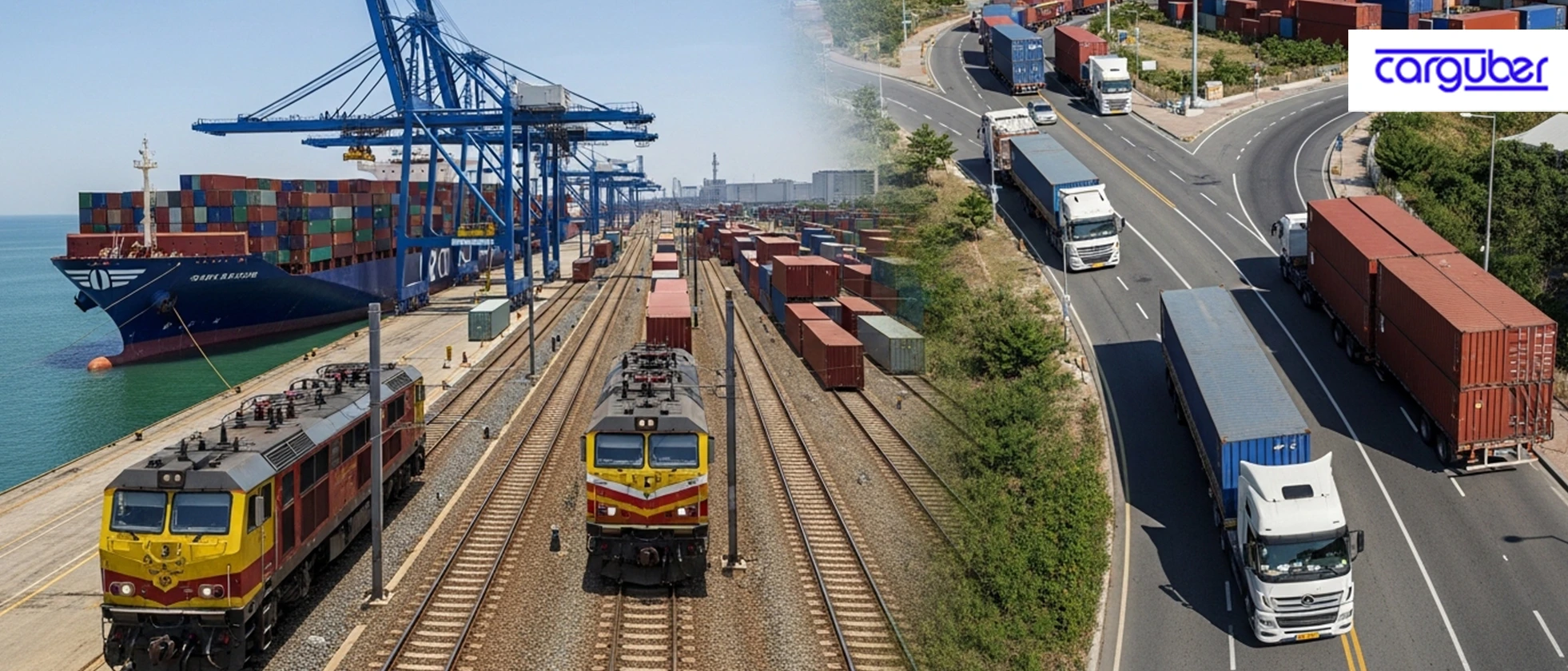
Modern supply chains rarely rely on a single mode of transport.
A shipment may move:
- By ocean to a port
- By rail inland
- By truck for final delivery
The challenge is to make sure that all of those transport legs work together effectively. Without CargoWise integration, each mode operates separately, resulting in delays, communication gaps, and increased planning complexity.
CargoWise rail freight integration combines those modes into a single continuous workflow.
Operations teams can align:
- Rail departures with vessel arrivals
- Inland transport with warehouse schedules
- Container availability with delivery planning
This leads to smoother multimodal execution and better shipment coordination from origin to destination.
Improving Cost Control Across Long-Distance Freight
Transportation costs continue to rise in the logistics industry. Road freight, particularly over long distances, is becoming more expensive due to:
- Fuel price fluctuations
- Vehicle operating costs
- Capacity shortages
- Toll increases and route congestion
Rail offers a more stable and scalable alternative for many inland routes.
With CargoWise integration, teams can evaluate rail alongside other modes of transportation during the planning phase, rather than after costs have risen.
This allows businesses to:
- Identify cost-saving opportunities
- Reduce dependency on long-haul trucking
- Improve shipment profitability
- Optimize transport allocation strategically
Even minor routing improvements can result in substantial financial savings over time.
Real-Time Visibility Changes Operational Decision-Making
Visibility is no longer limited to tracking cargo location.
Modern logistics teams need visibility into:
- Delays
- Route disruptions
- Estimated arrivals
- Mode transitions
- Schedule reliability
CargoWise rail integration delivers real-time movement updates and schedule visibility within operational workflows.
This allows teams to:
- Make faster planning decisions
- Respond proactively to disruptions
- Communicate accurate ETAs to customers
- Improve service reliability
Instead of waiting until problems arise, operations teams can manage shipments in advance.
Reducing Manual Coordination Across Teams
One of the biggest hidden inefficiencies in logistics is manual work.
- Re-entering data
- Coordinating schedules manually
- Updating shipment statuses
- Managing separate documentation processes
When rail freight is disconnected from the core system, the manual tasks multiply. CargoWise automates a large portion of this process.
Integrated rail workflows can support:
- Automated booking management
- Centralized shipment updates
- simplified documentation
- Faster rate calculations
- Reduced data duplication
This increases productivity while reducing operational errors.
Supporting Sustainable Logistics Goals
Sustainability has become a major concern throughout global supply chains. Customers, partners, and regulators increasingly expect logistics providers to reduce environmental impact without sacrificing efficiency.
Rail freight plays an important role in achieving these objectives.
When compared to long-distance trucking, rail can significantly reduce
- Carbon emissions
- Fuel consumption
- Road congestion
Businesses can integrate rail directly into CargoWise planning workflows, making sustainability part of everyday operational decision-making rather than a separate initiative.
Building More Reliable Supply Chain Performance
In logistics, service reliability is just as important as speed. Missed connections, inland delays, and poor coordination among modes of transportation can all have an impact on the overall shipment timeline.
CargoWise rail freight integration improves reliability by offering:
- Better scheduling visibility
- More accurate arrival forecasting
- Stronger coordination between transport legs
- Improved planning consistency
This allows logistics teams to maintain more control over shipment execution while increasing customer confidence.
Why does CargoWise Rail Integration Matter Now More than Ever?
The logistics industry is changing rapidly. Businesses face pressure to:
- Lower operational costs
- Improve shipment visibility
- Reduce environmental impact
- Increase delivery reliability
- Handle growing shipment volumes efficiently
Rail freight integration can help with all of these goals, but only if Cargowise is properly implemented and integrated into the actual logistics process.
That is precisely where CargoWise integration adds value.
Instead of treating rail as a separate mode of transportation, it is now fully integrated into multimodal logistics planning.
Why do You Need Expert Support for CargoWise Rail Freight Integration?
Rail freight integration in CargoWise involves much more than simply connecting transportation data. It requires proper alignment between operational workflows, financial processes, carrier mappings, milestones, and reporting structures.
Without the right setup, businesses may face visibility gaps, manual processing issues, inconsistent reporting, and inefficient shipment planning.
That’s why expert support matters.
At Carguber, we help you optimize and configure CargoWise rail freight integration based on how your business actually operates. From workflow planning to system alignment, our team ensures your rail operations integrate smoothly with your multimodal logistics process, helping you improve efficiency, visibility, and operational control.
Conclusion
Rail freight transportation is becoming an increasingly important part of modern multimodal logistics, aiding freight forwarders in improving inland transportation efficiency, lowering operational costs, and increasing supply chain visibility.However, the true benefit comes when your rail freight integration is properly aligned with your CargoWise environment and business processes. Schedule a call with Carguber today to make your CargoWise rail freight integration smoother, smarter, and fully aligned with your logistics workflows.