How does DataFreight Integration with CargoWise Enable Smarter Compliance Management?
Compliance is no longer a support function in the global freight and logistics industry; rather, it is a core operational requirement. Freight forwarders, customs brokers, and logistics service providers must navigate increasingly complex customs regulations, trade laws, taxation rules, and data governance standards, all while managing high shipment volumes and short delivery times.
Many organizations already use robust platforms such as CargoWise for global logistics execution and DataFreight for freight, customs, and warehouse operations, particularly in the United Kingdom and Europe. However, when these platforms work independently, compliance processes remain fragmented, manual, and reactive.
Understanding the Compliance Landscape in Modern Freight Operations
Compliance in freight forwarding affects almost all operational processes. Each shipment must comply with a variety of regulatory requirements, including:
- Customs declarations and trade documentation
- Tariff classification and valuation
- Duty, VAT, and tax reporting
- Bonded and non-bonded warehouse compliance
- Audit trails and regulatory reporting
These requirements vary according to country, trade lane, and commodity. Even minor data inconsistencies, such as incorrect codes, missing documents, or late filings, can result in shipment delays, penalties, audits, and strained customer relations.
As operations grow and regulations change, managing compliance becomes more difficult without system-level automation and integration.
CargoWise and DataFreight: Two Platforms with Distinct Strengths
CargoWise: Global Logistics Execution and Compliance Platform
CargoWise is a cloud-based logistics execution platform used by thousands of businesses worldwide. It brings together freight forwarding, customs compliance, transportation management, warehousing, and finance into a single global system.
CargoWise excels at:
- Managing multimodal shipments across countries
- Embedding compliance into operational workflows
- Automating customs and regulatory processes
- Providing global visibility across branches and regions
It acts as the central operational system of record for global logistics execution.
DataFreight: Freight, Customs, and Warehouse Expertise
DataFreight Customs system is a specialized logistics software platform that excels at freight forwarding, customs processing, and warehouse management, with a focus on compliance with UK and European regulations.
DataFreight is widely used for:
- Customs declarations and duty management
- Bonded and CFSP warehouse operations
- Freight forwarding workflows
- Regulatory reporting and audit support
Its strength is its compliance-focused design, which is tailored to the real-world needs of freight and customs professionals.
Common Compliance Challenges Without System Integration
CargoWise and DataFreight’s custom systems run independently, making compliance management fragmented and difficult to manage. Instead of encouraging efficient operations, disconnected platforms frequently result in gaps in visibility, accuracy, and accountability. Over time, these gaps raise operational risk and put additional strain on compliance teams.
The following are the primary challenges that organizations face when systems are not integrated.
Duplicate Data Entry and Manual Reconciliation
When CargoWise and DataFreight are separate systems, teams frequently have to manually enter the same shipment, customer, and customs information into both platforms. This redundancy creates inefficiencies and increases the likelihood of errors.
- Higher risk of human error from repeated data entry
- Inconsistent data across systems, leading to operational confusion
- Extra time spent verifying and correcting records
- Manual duplication slows workflows and complicates compliance management
Integrated systems eliminate duplication, ensuring that data flows smoothly and accurately across platforms.
Inconsistent and Conflicting Data
Standalone systems always result in discrepancies between records. Changes made in one platform may not be reflected in the other, resulting in misalignment and potential compliance issues.
- Mismatched shipment values, quantities, or delivery details
- Conflicting consignee, classification, or documentation information
- Differences in declared values or shipment references
- Potential customs inspections, queries, or shipment delays
By centralizing data, organizations can maintain a single source of truth, reducing conflicts and improving confidence in submissions.
Limited Visibility and Audit Readiness
Disconnected systems make it difficult to track compliance status and keep structured audit trails, limiting the ability to act proactively.
- Difficulty monitoring where a shipment is in the compliance lifecycle
- Delayed identification of missing or incorrect documentation
- Limited ability to generate comprehensive reports quickly
- Harder to demonstrate due diligence during audits or regulatory inquiries
However, integrated platforms provide real-time and structured data, which increases visibility and enables faster, more accurate compliance reporting.
Manual Intervention and Inconsistent Compliance
Without integration, employees must manually bridge gaps, increasing operational strain and resulting in inconsistency across shipments, teams, and regions.
- A greater likelihood of human error due to manual processes
- Dependency on individual knowledge rather than standardized workflows
- Uneven application of compliance rules and policies
- Slower onboarding of new staff and limited scalability
Automation ensures that rules are applied consistently, reducing errors and increasing the reliability of compliance throughout the organization.
Increased Risk and Operational Costs
Fragmented systems not only increase compliance risk, but they also raise the labor, cost, and effort required to effectively manage operations.
- Higher exposure to failed audits, penalties, and delayed customs clearance
- Difficulty adapting quickly to regulatory changes across systems
- Operational strain from reconciling errors and managing exceptions
- Increased training and staffing are needed to handle manual processes
Integrated systems simplify compliance, lower operational costs, and allow teams to concentrate on high-value tasks rather than tedious manual labor.
CargoWise and Datafreight Integration Improve Compliance Management
Integrating DataFreight and CargoWise turns compliance from a reactive process to a proactive, system-driven capability. Here is
A Single Source of Truth for Compliance Data
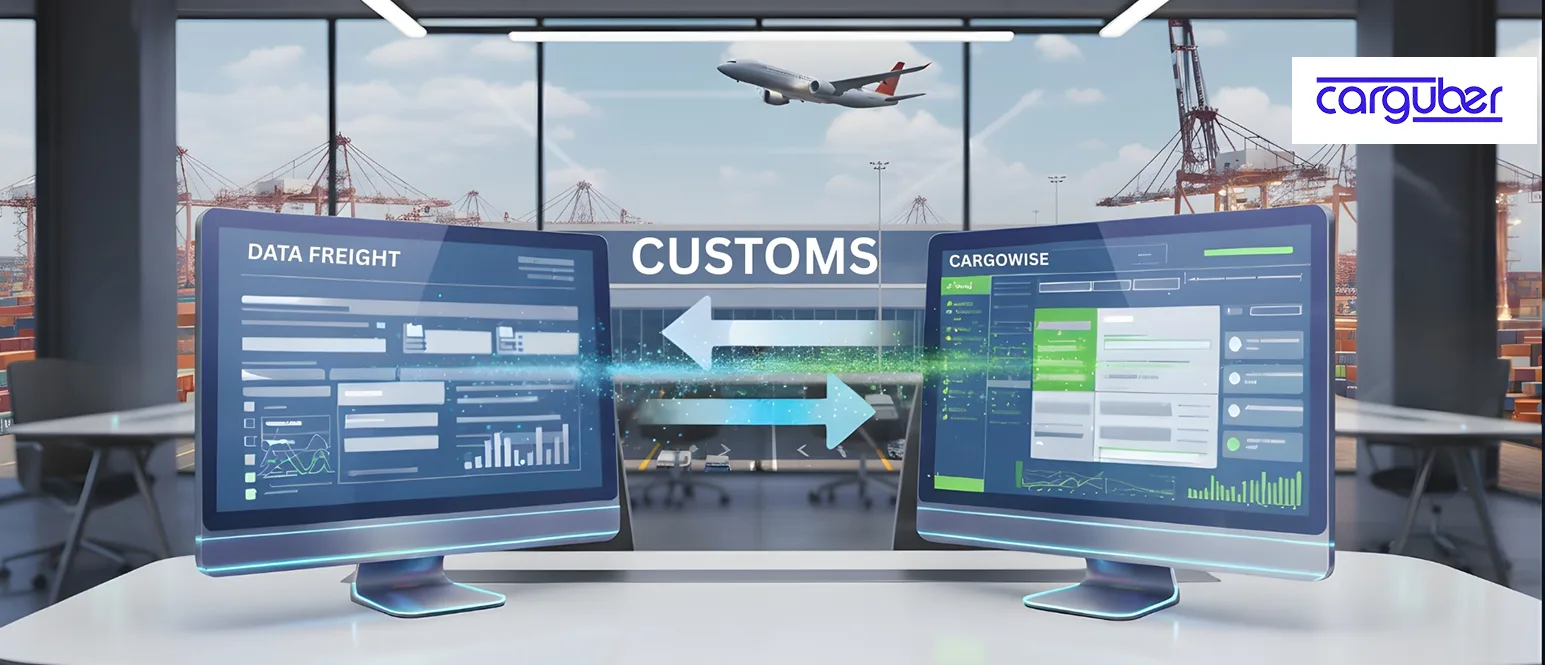
Integration ensures that shipment, customs, financial, and warehouse data are seamlessly transferred between CargoWise and DataFreight. This results in a single, consistent dataset for use by operations, finance, and compliance teams.
When data is unified:
- Errors caused by mismatches are eliminated
- Teams trust compliance reports and dashboards
- Regulatory submissions are more accurate
- Decision-making becomes faster and more confident
Automated Compliance Validation and Controls
Compliance checks can be built directly into operational workflows using integrated systems. Required fields, documentation requirements, and regulatory rules can all be validated automatically as data is entered.
This enables:
- Early detection of missing or incorrect information
- Prevention of non-compliant shipments before release
- Reduced dependency on manual reviews
- Consistent compliance enforcement across teams
Automation shifts compliance away from manual policing and toward intelligent prevention.
Real-Time Compliance Visibility
Integrated data enables organizations to track compliance status in real time. Dashboards and reports can display:
- Compliance status by shipment, customer, or region
- Exceptions requiring attention
- Trends in recurring compliance issues
- High-risk trade lanes or commodities
Instead of waiting for month-end reports or audits, compliance teams have continuous visibility and control.
Audit-Ready Reporting and Traceability
Audits are among the most time-consuming aspects of compliance. Disconnected systems frequently take days or weeks to gather documents, reports, and explanations.
With DataFreight–CargoWise integration:
- All compliance data is stored centrally
- Documentation is linked to shipments and transactions
- Full audit trails show who changed what and when
- Reports can be generated quickly and consistently
This significantly reduces audit preparation effort while increasing regulatory confidence.
Scalability for Growth and Regulatory Change
As freight forwarders enter new markets or increase shipment volumes, compliance becomes more complex. Manual processes and fragmented systems cannot keep up with this growth.
An integrated DataFreight-CargoWise environment includes:
- Consistent compliance standards across regions
- Ability to adapt to regulatory changes
- Scalable procedures for high-volume operations
- A compliance framework that is ready for the future
This enables businesses to expand without increasing compliance risks.
Carguber’s Expertise in Delivering Complete DataFreight –CargoWise Integration
Technical proficiency and in-depth knowledge of the logistics domain are necessary to fully reap the benefits of integration. Carguber is an expert in it.
- Tailoring integration architectures for real-world customs workflows
- Mapping data across cargo, customs, and finance processes
- Ensuring secure, real-time data synchronization
- Optimizing compliance validations and exception handling
- Supporting ongoing regulatory changes
What do you achieve?
- Data flows accurately and securely
- Compliance rules align with business processes
- Systems scale without performance issues
- Ongoing regulatory changes are supported
We make integration a strategic advantage rather than a technical challenge.
Conclusion
Compliance is no longer an isolated task; it is essential for operational performance, customer satisfaction, and regulatory confidence in global logistics.
Don’t let disconnected systems slow down your operations or put your company at risk. Enjoy the full benefits of integrated DataFreight and CargoWise solutions, including smooth compliance, real-time visibility, and operational efficiency. Schedule a call today!