CargoWise Evolution Journey: From Logistics Software to the Backbone of Modern Freight Forwarding
The system behind every shipment.
CargoWise is a widely used cloud-based logistics execution platform and freight forwarding software for freight forwarders, customs brokers, warehouse operators, carriers, and drayage companies. CargoWise Next currently supports international forwarding, customs and compliance, warehousing, transportation, e-commerce, parcel, enterprise operations, carrier connectivity, landside logistics, and customer visibility, and it is the platform’s fourth-generation evolution.
However, CargoWise did not start as a full global logistics ecosystem. Its journey began in Australia in 1994, when Richard White and Maree Isaacs established WiseTech Global and began writing code for Australian freight forwarders.
The real story behind CargoWise is more than just software. It tells the story of how freight forwarding evolved from manual administration to integrated execution, from local systems to global standardization, and finally from digital workflows to AI-assisted decision-making.
1994: The Beginning — Software Built for Freight Forwarders
WiseTech Global was founded in 1994, and its early work focused on developing software for Australian freight forwarders.
That detail is important because CargoWise was not designed as a general ERP system and was later adapted for logistics. It emerged from freight forwarding operations.
In the 1990s, logistics teams were tasked with arduous manual labor. A typical forwarding office relied on printed documents, faxed instructions, disconnected accounting software, and repetitive data entry. A shipment file may contain booking information, bills of lading, customs paperwork, supplier invoices, customer invoices, delivery notes, and payment records, but much of that information is stored in separate locations.
The early value of CargoWise was simple but powerful: move freight workflows into a structured digital system.
For forwarders, this meant fewer duplicate entries, improved job control, faster document handling, and more consistent operational visibility. At this point, the goal wasn’t advanced AI or global predictive visibility. The goal was to replace manual chaos with a system capable of handling real forwarding work.
1999–2004: From Local Freight Software to Stronger Product Capability
By 1999, WiseTech had made its first acquisitions to expand its product offering and customer base in Australia. Then, in 2004, the company developed ediEnterprise, which WiseTech describes as its second-generation global software solution.
This was a major step in the CargoWise journey because ediEnterprise moved the product closer to what freight forwarders needed at scale: integrated operational control.
During this phase, the logistics industry was already becoming more complex. Global sourcing was expanding. Freight forwarders were handling more multi-country moves. Customers were expecting quicker status updates. Customs data requirements were becoming more structured. Basic shipment software was no longer enough.
Forwarders needed a system that could connect operational events with commercial and financial outcomes.
That meant connecting:
- Air and ocean freight jobs
- Customs declarations
- Customer and supplier billing
- Accruals and payables
- Warehouse activities
- Branch-level and group-level visibility
The evolution from early freight software to ediEnterprise gave WiseTech a stronger foundation to support larger forwarders, more transactions, and broader logistics workflows.
2006–2008: Multi-Regional Focus and SaaS Licensing
In 2006, WiseTech expanded operations offshore and shifted its focus toward multi-regional logistics service providers. In 2008, the company introduced software-as-a-service (SaaS) and on-demand licensing.
This shift was important because freight forwarding was becoming more global, but many technology systems were still local. A company might run one system in Australia, another in Singapore, another in the United States, and several spreadsheets in between.
For freight forwarders, this created everyday problems:
- The same shipment data was entered multiple times.
- Local branches used different processes.
- Managers had limited global reporting visibility.
- Finance teams struggled to compare branch performance.
- Compliance updates depended heavily on local knowledge.
A SaaS and on-demand model helped CargoWise move toward a more scalable future. Instead of treating logistics software as a local installation, WiseTech moved closer to a globally accessible operating model.
This was also a sign of where the market was heading. Freight forwarders needed systems that could support distributed teams, multi-branch operations, and shared data access without requiring every office to build its own technology stack.
2014: CargoWise One and the Third-generation Global Platform
The biggest turning point came in 2014. WiseTech launched its third-generation, deeply integrated global logistics platform, CargoWise, and CargoWise One was released as a major product as the company rebranded to WiseTech Global.
This was the moment CargoWise moved from being a freight system to becoming a global logistics execution platform.
CargoWise One was built around a powerful idea: freight forwarders should not need disconnected systems for forwarding, customs, warehousing, transport, finance, and reporting. They should be able to manage global logistics execution from one deeply integrated platform.
For freight forwarders, this solved a major operational pain point. When systems are disconnected, every handoff creates risk. A quote may not match the invoice. A shipment milestone may not update the customer. A customs file may not align with the commercial invoice. A warehouse receipt may not connect cleanly to the forwarding job.
A single-platform approach helps reduce those gaps.
This is where CargoWise started to become especially attractive to larger freight forwarders and 3PLs. They were not just looking for software. They were looking for standardization across offices, countries, users, and processes.
2014–2016: Compliance, Global Rollout, and Public-Market Growth
After the CargoWise One launch, WiseTech continued expanding global capabilities. In 2015, the company raised $35 million in equity funding to support long-term growth, including acquisitions in China and South Africa. In 2016, WiseTech Global went public on the Australian Securities Exchange with a valuation of $1 billion.
During this period, customs and regulatory compliance became a major part of the CargoWise evolution. CargoWise One advanced ACE compliance solutions for U.S. Customs and Border Protection requirements, and WiseTech reported that customers were using CargoWise One for New Zealand’s Trade Single Window initiative.
This phase matters because freight forwarding is not just about moving cargo. It is also about moving compliant data.
Every cross-border shipment depends on accurate classification, valuation, origin, party details, licenses, customs entries, and regulatory filings. If the data is wrong, the result can be delayed clearance, penalties, storage charges, demurrage, or customer dissatisfaction.
CargoWise’s evolution during this phase showed a clear direction: the platform was not only trying to manage freight execution; it was also trying to help logistics providers stay compliant in increasingly complex trade environments.
2017–2018: Acquisitions Expand Customs, Rate Management, Transport, and Warehouse Depth
WiseTech’s acquisition strategy became highly visible in 2017 and 2018. In 2017, WiseTech entered the ASX 200, had more than 250 CargoWise partner organizations, and accelerated growth with targeted acquisitions in Germany, Italy, Singapore, and the United States. In 2018, the company completed 15 acquisitions across Asia Pacific, Europe, and the Americas; CargoWise became available in 30 languages; and global tracking was launched in CargoWise, covering vessels and containers for 90% of ocean volumes.
Several acquisitions from this period show how CargoWise was expanding beyond traditional forwarding. WiseTech acquired customs solutions providers in Germany, Italy, Canada, Spain, Belgium, Turkey, the Netherlands, Sweden, and other markets, along with logistics, warehouse, parcel, LTL, intermodal, rate management, and transport technology businesses.
This phase shows one of the most important parts of CargoWise’s evolution: local compliance depth plus global platform scale.
That combination is hard to build.
A global platform gives a forwarding company standardization. But customs are local. Regulations differ by country. Filing formats differ by government. Documentation rules differ by product, mode, and trade lane. WiseTech’s acquisition strategy helped deepen regional expertise while continuing to build the broader CargoWise ecosystem.
For forwarders, this meant CargoWise was becoming more than a shipment system. It was becoming a control layer for global freight, customs, rates, transport, and warehousing.
2018: Global Tracking and the Rise of Visibility Expectations
In 2018, WiseTech launched global tracking in CargoWise, covering vessels and containers for 90% of ocean volumes.
That update aligned with one of the biggest shifts in logistics: customers no longer wanted periodic updates. They wanted visibility.
Before this shift, tracking was often reactive. A consignee asked for an update, the forwarder emailed the carrier or checked a portal, and then someone manually responded. That model worked when shipment volumes were manageable and customer expectations were lower.
But e-commerce, global sourcing, tighter inventory cycles, and disruption-heavy trade lanes changed the expectation. Customers began asking the following:
- Where is my cargo now?
- Has the vessel departed?
- Is the container rolled?
- Will the ETA change?
- Is there a customs hold?
- Will delivery still happen on time?
CargoWise’s move into global tracking helped align the platform with a visibility-first logistics market.
Building on this visibility direction, CargoWise has also expanded into container automation, helping freight forwarders move beyond basic tracking. Instead of only seeing where a container is, teams can manage related steps like bookings, shipment updates, rates, customs data, invoices, schedules, and milestones within a more connected workflow.
The practical outcome for forwarders is clear: better tracking reduces manual follow-ups, improves customer communication, and helps operations teams act before a delay becomes a service failure.
2019–2020: Enterprise Adoption and Global Standardization
By 2019, WiseTech had more than 35 development centers worldwide and reported that 10 of the world’s largest logistics providers were rolling out CargoWise globally. In 2020, WiseTech reported that all 25 of the top 25 global freight forwarders and 41 of the top 50 third-party logistics providers used its solutions.
This stage represents CargoWise’s move into enterprise standardization.
Large freight forwarders face a different level of complexity compared with smaller operators. They need consistent processes across branches, countries, currencies, languages, transport modes, and compliance regimes. They also need reporting that leadership can trust.
A global forwarder cannot scale properly if each office works differently. One branch may create jobs one way, another may invoice differently, and another may manage exceptions outside the system. That creates hidden costs.
CargoWise became valuable because it gave enterprise forwarders a way to build a common operating model.
For example, a CargoWise global rollout can help a freight forwarder standardize the following:
- Job creation
- Shipment milestones
- Charge codes
- Accrual workflows
- Customs documentation
- Customer visibility
- Profitability reporting
- User training
- Management dashboards
This is where CargoWise started functioning as a true operating backbone, not just a software tool.
2021–2022: Training, Certification, and Practitioner Maturity
By 2021, WiseTech described itself as a leader in international logistics software with more than 1,800 employees and entered the ASX 50. In 2022, it reported 43 large global freight forwarder rollouts, including 10 in the top 25 large global freight forwarders ranked by Armstrong & Associates, plus $180.8 million invested in research and development, 19,000 certified CargoWise practitioners worldwide, and 9,700 courses completed through WiseTech Academy.
This phase is often overlooked, but it is extremely important.
Software value depends on user capability. A powerful system can still perform poorly if teams do not understand how to configure it, use it, and optimize it.
For freight forwarders, the challenge is not simply “Do we have CargoWise?” The better question is, “Are our people using CargoWise properly?”
CargoWise certification, structured learning, and partner networks became part of the ecosystem because platform adoption requires more than implementation. It requires operational discipline, role-based training, workflow ownership, and continuous improvement.
This is especially important for teams working across forwarding, customs, warehouse, finance, and customer service. If one department uses the system correctly and another relies on spreadsheets, the value drops quickly.
2023: Accounting, Finance, and Operational Efficiency Improvements
In 2023, CargoWise highlighted updates to global accounting configuration features, such as improved FX batch payment functionality and improved electronic invoicing in China, and updated electronic reporting in Turkey. WiseTech positioned these updates as part of a larger product development and innovation strategy to improve efficiency, visibility into spending, margin control, and financial performance.
This is an important development because freight forwarding profitability is often won or lost in the details.
A shipment may look profitable at the operational level, but if accruals are missing, exchange rates are handled poorly, supplier invoices are delayed, or billing is inaccurate, the margin can disappear.
CargoWise’s finance-related evolution reflects a real-world forwarding problem: operations and finance cannot work in isolation.
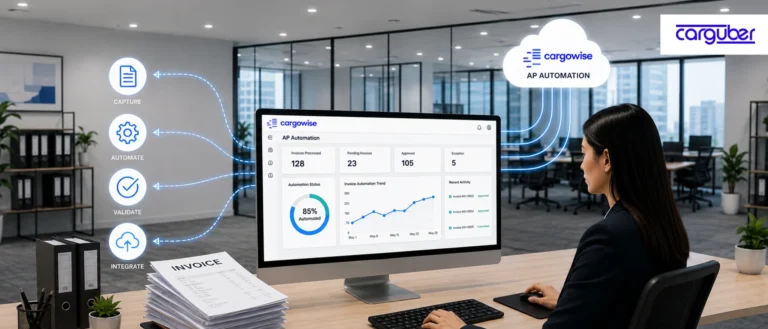
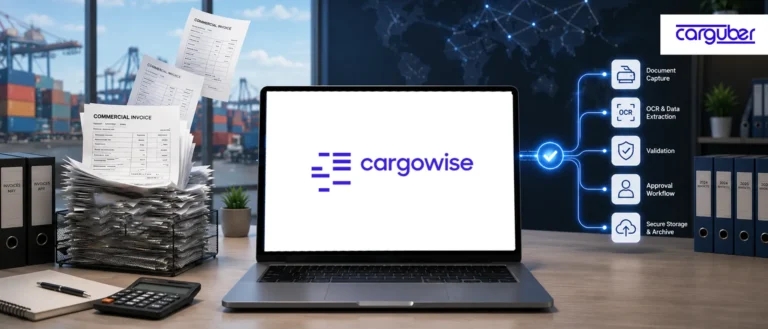
The CargoWise Document Management Portal facilitates this efficiency shift by allowing teams to capture, validate, and map trade document data directly into CargoWise. This reduces manual entry from bills of lading, invoices, packing lists, and customs files, allowing operations, customs, and finance teams to work with more accurate data.
This is where CargoWise’s integrated model becomes especially useful. When operational events and financial transactions are connected, leaders can track profitability with more confidence.
2025: e2open Acquisition and the Move Toward a Connected Trade Ecosystem
In August 2025, WiseTech completed its acquisition of e2open, a U.S.-based provider of cloud-based trade and supply chain SaaS solutions. WiseTech stated that the acquisition significantly expanded its addressable market across the global logistics and global trade sectors.
This is one of the biggest strategic updates in the recent CargoWise journey. Alongside this acquisition, 2025 also marked the rollout of CargoWise Next, WiseTech’s fourth-generation platform and the next major stage after the CargoWise One era that began in 2014.
CargoWise has traditionally been strongest in logistics execution for forwarders and logistics providers. E2open brings broader supply chain, trade, and connected-network capabilities. Together, the direction is clear: WiseTech is moving beyond logistics execution alone and toward a multisided global trade and logistics environment.
CargoWise’s expansion into rail freight integration complements its overall landside logistics strategy. CargoWise makes it easier for freight forwarders to manage inland visibility after cargo leaves the port by connecting container movement across road, rail, terminals, warehouses, and delivery points.
For freight forwarders, this matters because customers are no longer only asking for shipment execution. They want connected supply chain services.
They want:
- Better upstream order visibility
- Trade document digitization
- Exception alerts
- Carrier connectivity
- Inventory and shipment coordination
- Predictive ETA data
- Compliance support
- Digital customer experiences
The e2open acquisition supports the trend that logistics technology is moving from “move the shipment” to “connect the trade process.”
2025: CargoWise Value Packs and Simplified Commercial Model
In December 2025, WiseTech launched CargoWise Value Packs, describing them as a new commercial model designed to simplify billing, reduce or eliminate platform overheads, and add a larger set of product capabilities for international forwarding, customs, warehousing, and land transport. WiseTech said the model replaced and enhanced the seat and transaction license model that had been in place since 2014.
The Value Packs include capabilities for logistics service providers, importers, exporters, and international traders, with expanded CargoWise Neo functionality, e2open tools, AI features, free WiseTech Academy training and certification, and access to AI tools such as the AI workflow engine, AI management engine, AI Classification Assistant, ComplianceWise, and the AI CargoWise Expert chatbot.
This update is important because pricing and module access can affect digital adoption. Many logistics companies own powerful systems but use only part of them because additional modules, training, or configuration costs slow adoption.
The CargoWise Value Pack model appears designed to reduce that friction.
For forwarders, the potential benefit is practical: more users can access more capabilities, and teams can move closer to a single operating model rather than working around licensing limitations.
The larger lesson is simple. CargoWise is not only evolving its product; it is evolving how customers consume the platform.
To understand the commercial shift in more detail, read our blog on Transitional Pricing Protection and CargoWise Value Packs.
It explains what freight forwarders should consider during the transition, including cost recovery, customer billing, charge codes, and margin reporting.
2025: Ace and the AI-assisted CargoWise Experience
In November 2025, CargoWise launched Ace, an AI-powered assistant built directly into CargoWise to answer platform questions with step-by-step guidance. CargoWise said Ace draws on WiseTech Academy materials, including how-to guides, FAQs, update notes, videos, and other verified content.
This update addresses a major user-experience challenge: CargoWise is powerful, but it can also be complex.
Experienced users may still lose time searching for the right process. New users may need help with basic workflows. Managers may see repeated errors because team members are unsure how to complete certain actions.
Ace is designed to reduce that gap by bringing guidance directly into the workflow.
For example, a user might need help linking a house bill to a master bill, entering customs declaration details, printing a warehouse label, or understanding why a workflow error occurred. Instead of leaving CargoWise to search documents or raise support tickets, Ace can provide contextual support inside the platform.
CargoWise also connected this update to a broader digital transformation trend, citing research with Reuters that found 71% of logistics professionals consider digital transformation a top priority, while 23% name it their top priority.
For forwarders, this is a major shift. The future of logistics software is not just more features. It is smarter help, faster onboarding, fewer mistakes, and embedded learning.
2025–2026: Warehouse Dashboards, Neo Upgrades, and Integrated AI Support
CargoWise’s November 2025 product update highlighted real-time warehouse product dashboards, integrated AI support, and upgrades to CargoWise Neo that simplify how users work.
This matters because warehouse operations are now more connected to forwarding than ever.
Freight forwarders and 3PLs increasingly need to manage cargo across the full journey: origin pickup, consolidation, customs, main leg, deconsolidation, bonded storage, warehouse handling, delivery, returns, and customer visibility.
Real-time warehouse dashboards can help teams understand cargo movement, order status, workload, exceptions, and productivity. Neo upgrades are also important because customers want direct access to shipments, orders, declarations, invoices, and more. CargoWise positions Neo as a customer-facing tool that gives live access to this information.
The trend is clear: visibility is no longer just for operations. It is now part of the customer experience.
A forwarder that can give customers live access to shipment and document status can reduce “Where is my cargo?” emails, improve trust, and create a more professional service experience.
2026: Direct Carrier Connections and Real-Time Booking
In January 2026, WiseTech and Tailwind Shipping Lines announced a direct data integration that lets freight forwarders plan, book, confirm, and manage ocean shipments in real time from within CargoWise. The announcement stated that CargoWise customers could access Tailwind schedules, dynamic rates, capacity, and booking changes without leaving CargoWise.
The same announcement stated that more than 99% of the world’s ocean freight managed through CargoWise can be electronically booked directly with shipping lines and NVOCCs.
This is a practical update for freight forwarders because ocean booking has historically been loaded with manual steps: checking schedules, comparing rates, emailing carriers, waiting for confirmations, re-entering booking details, and updating customers manually.
Direct data connections help remove double entry, reduce unnecessary emails, lower human error, and improve visibility and productivity.
This is also where CargoWise continues to compete strongly. Forwarders are not just choosing software based on screens and features. They are choosing based on connectivity.
A system that connects directly to carriers, customs authorities, warehouses, customers, and finance platforms can remove significant operational waste.
2026: IoT Container Tracking and Predictive Visibility
In February 2026, WiseTech and Hapag-Lloyd launched an IoT container tracking pilot to integrate Hapag-Lloyd’s Live Position and Live ETA data into CargoWise. Hapag-Lloyd’s fleet of 2 million containers is equipped with IoT devices that transmit location updates, and WiseTech said the pilot tests the ability to process millions of data points daily and transform them into meaningful milestones for decision-making.
The update also noted that Hapag-Lloyd’s dynamic ETA prediction adjusts in real time based on actual movement and location data collected through IoT pings, and for shipments where Hapag-Lloyd manages the entire journey from port to customer location; it improves delivery time accuracy by 75% compared with traditional static schedule predictions.
This is a huge signal for where CargoWise is heading.
The next stage of logistics visibility is not just knowing where a container was yesterday. It is knowing what is likely to happen next.
For forwarders, predictive visibility can support better planning around:
- Delivery appointments
- Warehouse labor allocation
- Customer communication
- Exception management
- Demurrage and detention prevention
- Inventory planning
- Port and landside coordination
The value is not the data itself. The value is turning raw data into operational decisions.
That is the next evolution of CargoWise: from visibility to actionable intelligence.
CargoWise Today: What has the Platform Become?
CargoWise today covers far more than traditional freight forwarding. Its solution areas include international forwarding, customs and compliance, e-commerce, transport, warehouse, parcel, enterprise tools, CargoWise Neo, carrier connectivity, liner and agency operations, landside logistics, container transport optimization, containers by road, containers by rail, and container exchange.
Its forwarding solution emphasizes real-time airline connections, booking management, shipment updates, comparison options, capacity booking, and structured control from a single system.
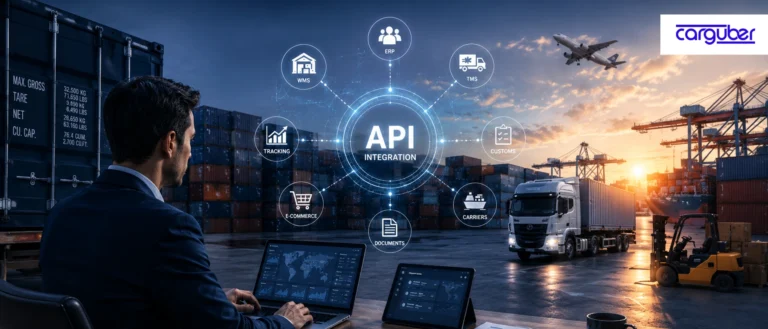
Its main features are the Document Management Portal, which automatically captures, validates, and maps trade document data into CargoWise; and the CargoWise API, which provides broad carrier coverage, near-real-time updates, and low latency.
This shows how the platform has evolved into four major capability layers:
Operational execution: Shipments, bookings, customs, transport, warehouse, and delivery.
Financial control: Billing, accruals, accounting, reporting, and margin visibility.
Connectivity: Carriers, customs, customers, partners, and trade networks.
Intelligence: AI support, document automation, predictive visibility, dashboards, and decision support.
For freight forwarders, this means CargoWise is no longer just a back-office freight system. It is becoming a connected operating environment for global logistics.
Competitor Insights: How does CargoWise Compare to the Overall Market?
CargoWise does not operate in an empty market. Freight forwarders also compare it with platforms such as Magaya, Descartes, Riege Scope, GoFreight, and other logistics technology providers.
Magaya’s digital freight platform focuses on shipping, warehousing, accounting, visibility, customer experience, and compliance, with a single system for quotes, customs documentation, warehouse management, and last-mile logistics.
Descartes emphasizes its global logistics network, connecting shippers, carriers, and logistics service providers with technology, data, and AI across transportation, customs compliance, routing, e-commerce fulfillment, and regulatory processes.
Riege Scope positions itself as integrated freight management software for air freight, ocean freight, and customs, with automation and third-party communication to reduce multiple data entries and system switching.
GoFreight positions itself as an AI-powered cloud freight forwarding software platform covering shipment operations, quoting, invoicing, CRM, tracking, and analytics.
The competitor trend is obvious: everyone is moving toward connected, cloud-based, AI-assisted freight operations.
But CargoWise’s difference is its long-term focus on enterprise-scale logistics execution, global rollouts, customs depth, carrier connectivity, and a broad product ecosystem. That is why CargoWise is often positioned for larger and more complex freight forwarders, while some competitors may appeal to small or mid-sized forwarders looking for easier onboarding, faster usability, or lighter operational complexity.
For industry professionals, the real decision is not “Which software has the longest feature list?” The better question is, “Which platform matches our operating model, growth plan, compliance footprint, and automation maturity?”
Why is CargoWise’s Evolution Important for Freight Forwarders Now?
CargoWise’s evolution matters because freight forwarding has changed.
Forwarders are no longer judged only on arranging transport. They are judged on visibility, documentation accuracy, compliance reliability, financial control, customer experience, and speed of response.
A modern forwarder must manage complexity across the following:
- Multiple transport modes
- High shipment volumes
- Changing customs rules
- Digital trade documentation
- Carrier schedule disruption
- Customer visibility demands
- Margin pressure
- Talent shortages
- System integration gaps
This is why CargoWise has continued expanding from freight execution into automation, AI, visibility, and trade connectivity.
The old freight software model was about recording what happened.
The modern logistics platform model is about helping teams decide what to do next.
That is the real evolution.
Practical Takeaways From the Cargowise Journey
The CargoWise journey teaches freight forwarders many valuable lessons.
First, digitization alone is insufficient. Many businesses already have a system, but they still use spreadsheets, emails, and manual checks. The real value comes when the system becomes the primary workflow, rather than just a database.
Second, standardization is important. If each branch uses CargoWise differently, the company loses visibility and control. Standard operating procedures, workflow templates, charge code discipline, and user training are required.
Third, automation should be linked to measurable results. Forwarders should monitor improvements such as fewer manual entries, faster document turnaround, lower invoice errors, fewer support tickets, shorter billing cycle times, and better margin visibility.
Fourth, AI should solve operational problems rather than create noise. Ace, CargoWise document automation, AI classification, and predictive tracking are useful when they reduce real work, resulting in fewer escalations, errors, faster onboarding, and improved exception handling.
Finally, customer visibility is now included with the service. CargoWise Neo, tracking APIs, real-time booking, and IoT visibility all reflect the same market reality: customers expect access, transparency, and proactive updates.
Key Takeaways
CargoWise began in 1994 as software designed for Australian freight forwarders and has since grown into a global logistics execution platform.
The 2004 development of ediEnterprise, the 2008 SaaS shift, and the 2014 launch of CargoWise One were major milestones in its platform journey.
Acquisitions from 2017 onward expanded CargoWise’s depth in customs, warehouse, transport, rate management, parcel, and regional compliance.
By 2020, WiseTech reported that all top-25 global freight forwarders and 41 of the top-50 3PLs used its solutions.
Recent updates show CargoWise moving strongly into AI support, document automation, Value Packs, customer visibility, direct carrier connectivity, and predictive IoT-based container tracking.
Competitors are also moving toward cloud, AI, visibility, and integrated freight workflows, but CargoWise remains especially strong in enterprise-scale global logistics execution.
For freight forwarders, the main question is no longer whether CargoWise is powerful. The real question is whether the business is using it properly.
Conclusion: CargoWise is Still Evolving. Are Your Workflows Evolving With It?
CargoWise has moved through several clear stages: local freight software, global system, SaaS platform, enterprise rollout engine, compliance ecosystem, connected logistics network, and now AI-assisted logistics execution.
That journey mirrors the freight forwarding industry itself.
The market has moved from paperwork to platforms, from local operations to global networks, from reactive tracking to predictive visibility, and from manual support to AI-assisted workflows.
For freight forwarders, the opportunity is not simply to “use CargoWise.” The opportunity is to align your people, processes, data, and workflows with what CargoWise has become today.
Because the companies that win the next stage of logistics will not be the ones with the most software. They will be the ones who use their CargoWise systems with the most discipline, intelligence, and customer focus.
If your team is using CargoWise but still struggling with manual workflows, disconnected processes, slow documentation, poor visibility, billing errors, or underused features, now is the right time to review your CargoWise setup. Schedule a free call with Carguber, a CargoWise support and helpdesk provider, today to discover how your CargoWise workflows can be optimized, automated, and aligned with your actual freight-forwarding operations.