Container shipping has always relied on coordination.
A shipment passes from shipper to forwarder, then from inland transport to port, vessel to customs, and finally to the consignee. Sounds simple, doesn’t it?
However, every container movement involves massive amounts of data being exchanged between various systems, platforms, carriers, terminals, and logistics partners. To be honest, this is where things frequently become complicated.
Manual re-keying, disconnected systems, inconsistent formats, email follow-ups, and custom integrations continue to cause delays and friction in global shipping operations.
That is why WiseTech Global’s recent announcement about joining the Digital Container Shipping Association DCSA+ is important.
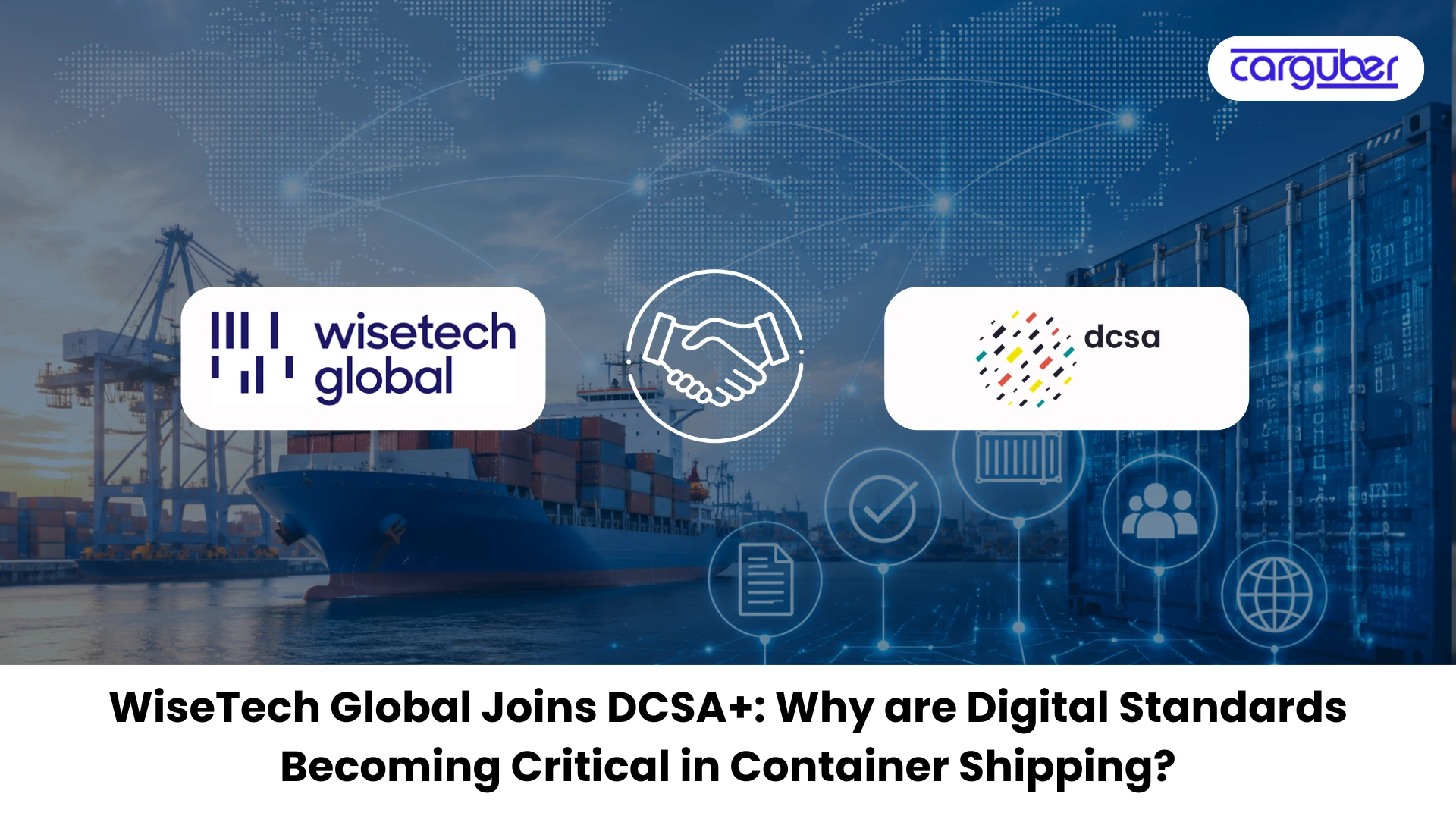
WiseTech Global has officially joined DCSA+, the Digital Container Shipping Association’s partnership program, to help accelerate the adoption of open digital standards throughout the container shipping industry.
📦 What is DCSA+ and Why does it Matter?
The Digital Container Shipping Association is dedicated to developing common digital standards for container shipping.
Simply put, DCSA works to ensure that shipping data flows more smoothly between carriers, freight forwarders, ports, terminals, customs systems, inland transport providers, and logistics platforms.
Today, many logistics workflows still rely on:
📧 Emails
📄 Manual document handling
🔁 Custom integrations
🧩 Disconnected systems
⏳ Repeated data entry
⚠️ Inconsistent shipment information
DCSA standards aim to reduce friction by introducing:
- Standardized data models
- Open logistics integration APIs
- Consistent shipment information formats
- Cleaner digital communication between systems
The objective is simple:
Enter data once and let it flow through the supply chain without repeated manual intervention.
🚢 Why is this Important for Freight Forwarders Using CargoWise?
Platforms powered by WiseTech Global include CargoWise and e2open, which are widely used in global freight forwarding and logistics operations.
Here’s a quick look at the numbers:
- Used by 46 of the top 50 global third-party logistics providers
- Used by 23 of the 25 largest freight forwarders worldwide
This means that when CargoWise supports digital standards, it has the potential to influence how shipment data moves across a large portion of the logistics industry.
This is important for CargoWise users because logistics operations frequently require multiple handoffs between:
- Carriers
- Freight forwarders
- Customs systems
- Transport providers
- Terminals
- Customers
Without standardization, each handoff presents another opportunity for delays, missing data, or manual corrections.
🔍 The Real-World Problem the Industry is Trying to Solve
Let’s get real.
Most of the logistics teams continue to spend hours:
- Re-entering shipment data
- Correcting document formats
- Checking booking details
- Reconciling invoices
- Managing disconnected integrations
- Following up when shipment information does not sync properly
When data is inconsistent, the operational impact rapidly grows:
⚠️ Shipment delays
📉 Visibility gaps
📄 Documentation errors
⏳ Slower booking and customs processing
🔁 Duplicate work across teams
📧 Endless follow-ups between partners
As the supply chain network grows in size, these issues become more difficult to manage manually.
That is precisely why digital standards are becoming such an important focus in container shipping.
However, without appropriate CargoWise integration and standardization:
- Teams continue to rely on manual interventions
- Shipment visibility remains fragmented
- Data inconsistencies continue to cause delays
- Operational efficiency improvements remain limited
That is why successful digital transformation depends not only on platforms, but also on how those platforms are implemented and integrated into operational workflows.
📊 Why is Industry Standardization Becoming a Bigger Priority?
Recent logistics technology trends show that the industry is making significant investments in interoperability, API connectivity, and digital data exchange to improve supply chain efficiency and reduce operational friction.
The issue is not that logistics companies lack systems.
The issue is that many systems still struggle to communicate clearly with one another.
DCSA standards aim to solve this by creating shared frameworks for:
- Bookings
- Shipment instructions
- Bills of lading
- Track and trace
- Vessel schedules
- Customs documentation
- Freight invoicing
- Container tracking
That creates stronger interoperability between logistics partners and helps reduce dependency on manual processes.
💬 What are Industry Leaders Saying?
Ashley Skaanild, Principal Advisor, Carrier Integration and Transformation at WiseTech Global, highlighted that managing global logistics flows depends heavily on clean and complete data.
He explained that standardized integrations help customers and carrier partners reduce friction during critical data handover points and improve operational efficiency.
He also noted that WiseTech has been using DCSA-based carrier APIs since 2019 and is now formalizing its collaboration through DCSA+ to support seamless end-to-end digitalization across container shipping.
Mariana Bock-Losada, Chief Growth Officer at Digital Container Shipping Association, emphasized that digital standards only create value when the industry adopts them broadly.
She noted that WiseTech’s operational scale and active use of DCSA standards help strengthen the practical adoption of industry-wide digital standards.
🚀 Final Thoughts
WiseTech Global’s joining DCSA+ reflects where container shipping is heading: more interoperability, cleaner integrations, better API connectivity, and stronger digital collaboration across the supply chain.
For CargoWise users, this is important because modern logistics operations can no longer rely on fragmented systems and manual data handling alone.
The future of container shipping depends on connected systems that can exchange shipment data accurately, consistently, and at scale.
As logistics technology continues evolving, businesses need more than just software; they need reliable operational support behind it. Get the right logistics support and helpdesk to simplify integrations, improve data flow, reduce manual effort, and help your operations move toward smarter digital logistics workflows.