The next major efficiency gain in freight forwarding may not come from faster shipments but from smarter document handling.
Documents have always been central to freight forwarding. Bills of lading, commercial invoices, packing lists, air waybills, customs entries, proof of delivery, debit, and credit notes all help shipments progress from one stage to the next.
But here’s the real issue: freight operations may be digital, while document processing is often still manual.
Teams still copy data from PDFs, validate invoice details, compare shipment references, check customs fields, and follow up through email. That may work for a few shipments, but once volumes grow, manual document handling quickly becomes a bottleneck.
🔍 What are the Latest Industry Moves Showing?
AI document automation is no longer an optional feature in freight forwarding. It is becoming an integral part of logistics companies’ efforts to improve speed, accuracy, and scale.
Businesses across industries are using AI to reduce repetitive work, improve data quality, and enable faster decision-making in workflows such as quoting, scheduling, shipment tracking, customs, billing, and compliance. Air cargo is also transitioning to a more connected digital model, with initiatives such as IATA ONE Record enabling transparent data exchange between air cargo stakeholders, systems, and platforms.
For freight forwarders, the direction is clear:
- 📄 Document workflows are becoming more intelligent, not just digital
- 🔍 AI helps detect errors, missing fields, and mismatched values earlier
- ⚡ Faster data movement supports billing, customs, and shipment updates
- 🔗 ERP, TMS, finance, and customs systems need cleaner, connected data
- 📊 Teams are shifting from manual checking to exception-based decisions
Simply put, the industry is shifting from “people reading every document” to “systems processing documents while people handle what needs to be done.”
💸 The Real Cost of Staying Manual
Manual processing may seem normal because freight teams have been doing it for years. However, “normal” does not always imply efficiency.
When teams manually enter invoice details, validate shipment references, check bills of lading, and compare documents to ERP records, the hidden cost accumulates quietly.
Manual workflows can lead to:
- ⏳ Slower job creation, billing, and approvals
- ⚠️ More errors in shipment, invoice, and customs data
- 🔁 Rework when documents do not match system records
- 📉 Limited visibility into document status
- 💰 Missed charges, billing delays, or financial discrepancies
- 🧾 Extra workload for operations, finance, and customer service teams
Over time, these delays affect cash flow, compliance, customer experience, and team productivity.
⚡ Why are Freight Forwarders Paying Attention Now?
Freight forwarders are facing pressure from all sides. Customers want quicker updates. Customs teams require precise data. Finance teams expect accurate billing. Operations teams are expected to handle more shipments without increasing manual labor.
The problem is that many freight documents still go through too many manual steps. A commercial invoice may need to be verified against shipment data. A bill of lading may need to be validated before it is released. Supplier invoices may need to be matched with accruals or job costs.
AI document automation enables teams to:
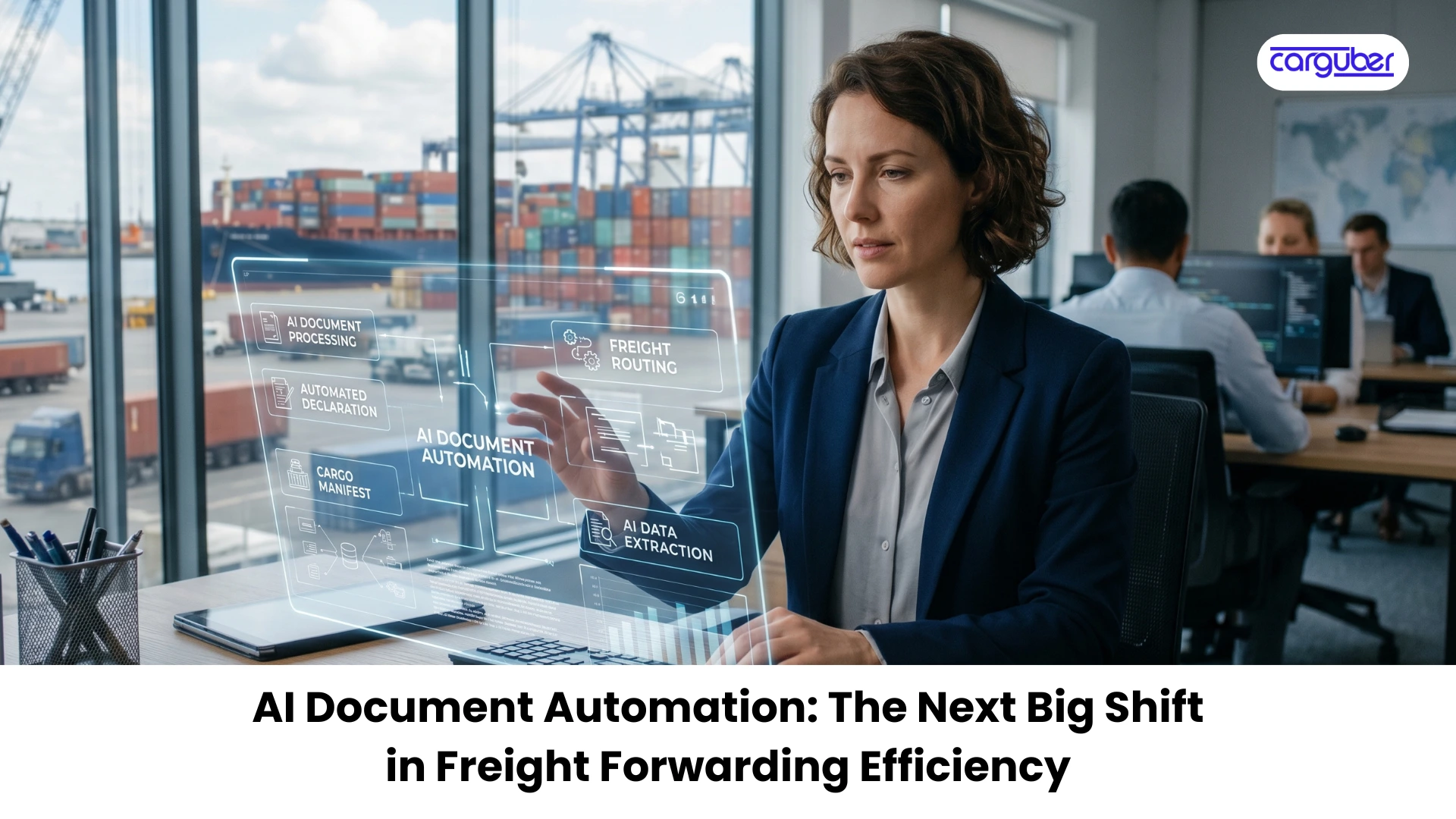
- 📄 Extract data from invoices, bills of lading, packing lists, and air waybills
- 🔍 Match document details with shipment and ERP records
- ⚠️ Flag missing fields, duplicate entries, or mismatches
- ⏱️ Reduce delays in billing, approvals, and customs preparation
- 📊 Improve visibility into document status and exceptions
The benefits are straightforward: fewer manual touchpoints, faster turnaround, cleaner data, and increased control throughout the shipment lifecycle.
🔗 How does it Integrate with Logistics ERPs?
Most freight forwarders already use platforms such as CargoWise, SAP, Oracle, NetSuite, and other logistics ERPs. However, even the best system is only as good as the data that enters it.
AI document automation helps to close the gap by converting unstructured documents into cleaner, system-ready data. Also, automating logistics documents improves logistics operations. Instead of manually reading documents and entering data into the ERP, AI can capture shipment references, supplier names, weights, charges, dates, invoice values, and other important fields.
It can then validate the data, match it with shipment records, accruals, or job costs, and route it to the appropriate workflow.
This enables logistics ERPs to become more connected, accurate, and responsive. Your team spends more time making decisions than entering information.
✅ Quick Check for Your Team
Take a minute and ask:
- Are invoices still manually entered into your system?
- Do teams check the same shipment details repeatedly?
- Are document errors delaying billing or customs steps?
- Can you see the document status without asking multiple people?
- Are documents connected to your ERP or still sitting in email inboxes?
🧭 Final Thoughts
AI document automation does not replace logistics teams. It is about reducing repetitive document work so that people can concentrate on more important tasks.
Freight forwarding efficiency is no longer limited to how quickly cargo moves. It is also about how quickly accurate information is transferred from documents to systems, decisions, and customer updates. Get the right logistics support and helpdesk to simplify document workflows, increase ERP efficiency, reduce manual labor, and improve visibility across your freight operations.