Customs was once thought of as a border checkpoint. Today, it serves as a data-driven control point throughout the shipment lifecycle.
The pressure on freight forwarders, customs brokers, and global logistics teams is increasing rapidly. Tariff rules are changing more frequently, authorities are tightening compliance checks, customers want faster clearance updates, and teams must process declarations without delays or manual errors.
So here’s the actual question:
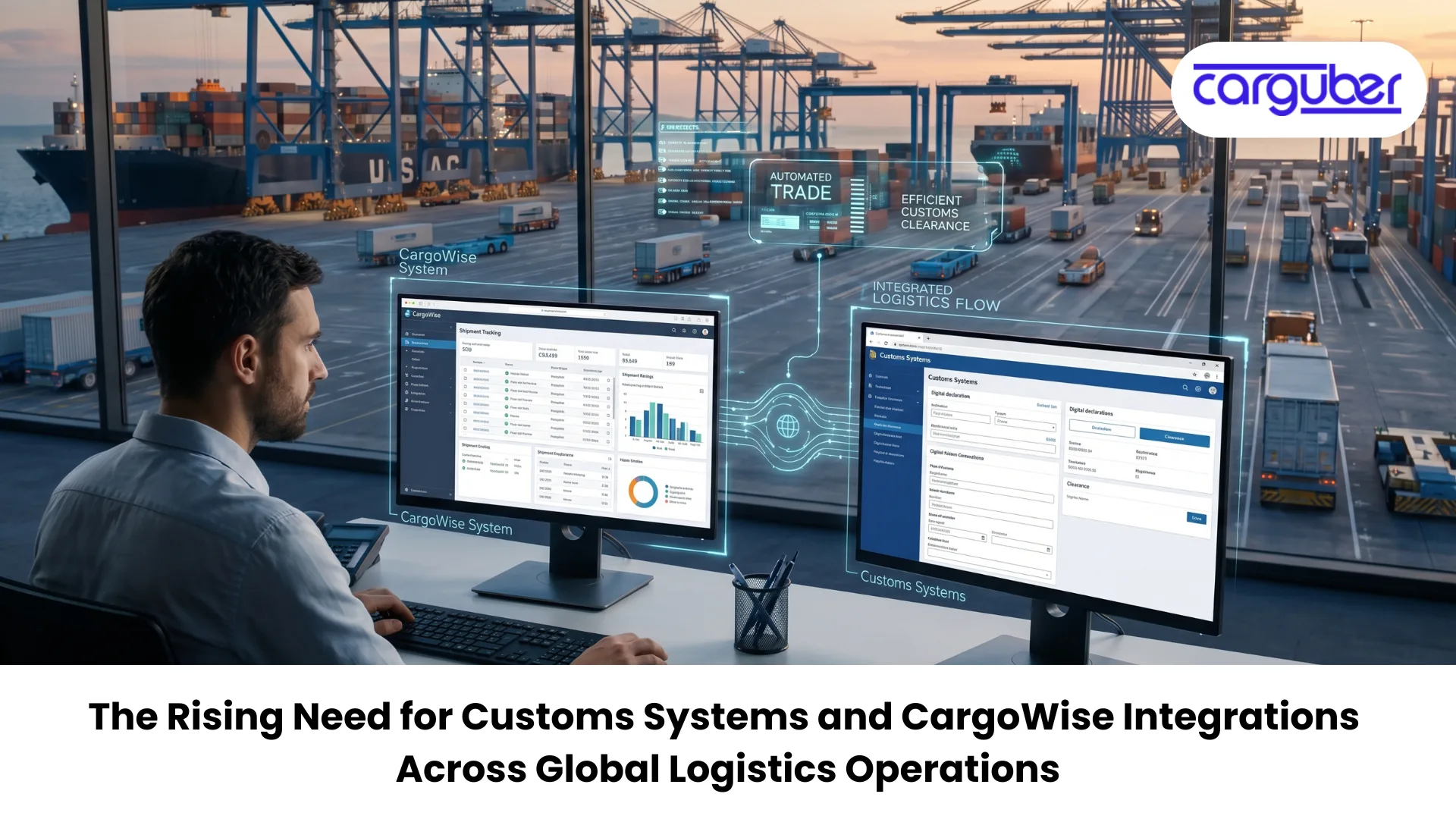
Is your customs process integrated into your CargoWise workflow, or does your team still manually transfer data between systems?
Because in today’s logistics, customs efficiency is more than just filing declarations. It is about integrating shipment data, customs systems, financial records, compliance checks, and customer visibility into a single, seamless workflow.
🌍 What are the Current Industry Trends?
Global customs is shifting to digital-first operations. The World Customs Organization continues to promote digital customs, smart customs, and data-driven border processes, emphasizing technology, automation, and secure data exchange. Its smart customs project focuses on assisting customs administrations in understanding and implementing disruptive technologies to facilitate and secure global supply chains.
Air cargo is also moving in the same direction. IATA’s ONE Record initiative aims to establish an end-to-end digital logistics and transportation supply chain in which shipment data can be exchanged transparently across stakeholders, platforms, and systems.
This is significant because customs clearance depends heavily on accurate data. When shipment data, commercial invoice details, HS codes, values, duties, and declaration information are not linked, teams waste time and risk.
⚠️ Manual Customs Processes Create Problems
Manual customs work may seem manageable when volumes are low. However, when declarations increase, cracks appear quickly.
A shipment can be created in CargoWise. Supporting documents may be in an email. Customs data can be entered in a separate portal. Duty calculations may be verified elsewhere. Finance may wait for final charges before billing.
This leads to an excessive number of handoffs.
Common issues include:
- 🔁 Re-entering shipment and invoice data across systems
- ⚠️ Errors in HS codes, values, weights, or supplier details
- ⏳ Delayed customs filing and clearance updates
- 📉 Limited visibility into declaration status
- 💰 Duty, tax, and billing mismatches
- 🧾 More follow-ups between operations, customs, and finance
And let’s be honest: when your team is copying data from one system to another, there is always room for error.
⏱️ Why is Customs Integration Increasingly Important?
CargoWise is also working to expand its customs and compliance capabilities. Its customs solutions focus on e-invoicing submissions, automated documentation, import and export declarations, and compliance control. CargoWise also highlighted customs updates for 2025, stating that customs and compliance teams will face stricter reporting requirements and shifting standards.
For logistics teams, the message is pretty clear:
- 📄 Customs is becoming more digital and data-heavy
- ⚖️ Compliance rules are changing faster
- 🔍 Authorities are relying more on structured data and risk checks
- ⏱️ Clearance delays can directly affect customer experience
- 🔗 CargoWise, customs systems, finance, and operations need to stay connected
In short, customs is no longer a separate back-office function. It is now directly linked to operational speed, compliance accuracy, and financial controls.
🔗 How do CargoWise Integrations Help Customs Teams?
CargoWise already integrates customs, forwarding, warehousing, transport, finance, and shipment workflows in a single operational environment. However, the true value is realized when CargoWise integrates directly with customs systems, government platforms, partner networks, and finance tools.
With proper customs integration, teams can:
- 🔗 Send declaration data from CargoWise into customs systems
- 📄 Reduce duplicate data entry
- ⚡ Receive status updates faster
- 🧾 Improve duty, tax, and declaration accuracy
- 🔍 Detect compliance issues earlier
- 📊 Keep operations, finance, and customs teams aligned
This enables customs teams to shift away from manual checking and toward exception-based management.
Instead of asking, “Where is the declaration status?” teams can focus on, “What needs action now?”
🌐 Why does this Matter for Global Logistics Operations?
Customs delays are more than just paperwork delays. They impact delivery timelines, warehouse planning, customer trust, cash flow, and compliance risk.
The WTO Trade Facilitation Agreement focuses on simplifying and expediting border procedures, demonstrating that customs modernization is now a global priority. At the same time, WCO/WTO research on disruptive technologies demonstrates how AI, data analytics, and digital tools are becoming increasingly important in customs risk management and supply chain security.
For freight forwarders and customs brokers, disconnected systems are becoming more difficult to justify.
✅ Fast Team Assessment
Take a minute and ask:
- Can your team file customs declarations without re-entering data?
- Are clearance updates visible inside your workflow?
- Do operations, customs, and finance work from the same information?
- Are HS codes, values, duties, and shipment references consistent?
- Can your team identify customs exceptions before they delay the shipment?
If these answers are unclear, your problem may not be related to customs knowledge. It’s possible that there is a system integration gap.
🚀Final Thoughts
Customs is getting faster, smarter, and more data-driven. For logistics companies, manual filing and disconnected systems are no longer adequate.
Because, in today’s logistics landscape, customs efficiency is more than just clearing goods. It is all about clean data, interconnected systems, precise filings, and faster decisions. Get the right logistics support and helpdesk to speed up customs integrations, reduce manual work, increase compliance visibility, and keep your global logistics operations running smoothly.