What does the WiseTech Global-Hapag-Lloyd IoT Container Tracking Initiative Mean for Freight Forwarders?
For decades, freight forwarders have used milestone-based tracking: departure confirmed, transshipment completed, arrival at port, and discharge. Although useful, these updates are frequently delayed, incomplete, or static. Decisions are made in a reactive manner. Customers are notified after disruptions occur.
The incorporation of real-time IoT container data from Hapag-Lloyd to WiseTech Global’s CargoWise platform represents a significant shift in how ocean freight visibility is delivered and, more importantly, used.
This collaboration marks a significant step toward predictive visibility, allowing freight forwarders to optimize operations, improve delivery accuracy, and make smarter, faster decisions across the global logistics network.
The IoT Container Tracking Pilot: Transforming Container Visibility
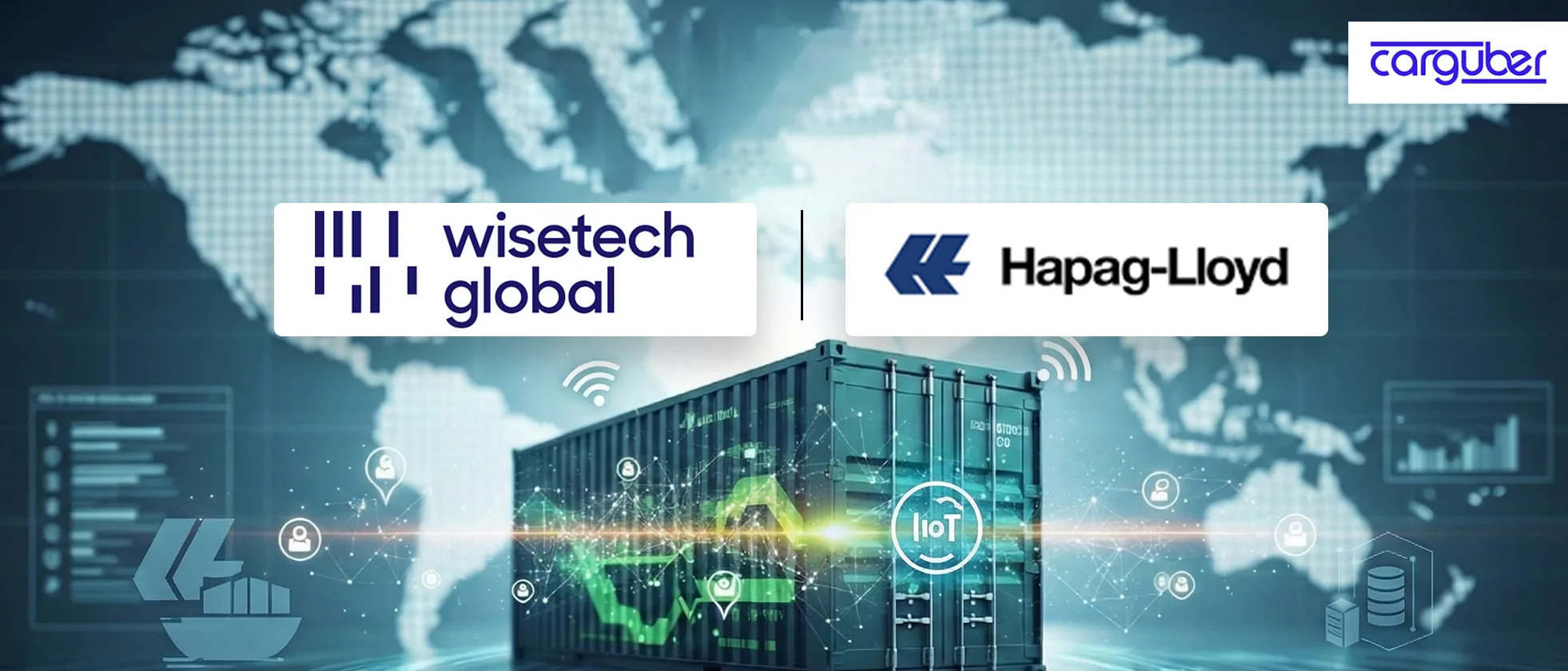
The IoT Container Tracking Pilot, a large-scale initiative between WiseTech Global and Hapag-Lloyd, aims to transform how container visibility is captured, processed, and delivered within CargoWise systems.
The pilot’s core concept is to go beyond traditional milestone tracking by combining smart container technology with advanced data processing capabilities.
The primary factors are;
2 Million IoT-Enabled Dry Containers: Hapag-Lloyd has outfitted its entire dry container fleet with smart IoT devices that can transmit real-time data throughout the shipment journey.
Continuous GPS-based Position Updates: Containers send frequent location signals regardless of mode of transportation, whether at sea, in port, by rail, or by truck.
Integration with the CargoWise Ecosystem: Live container data flows directly into CargoWise, embedding visibility within operational workflows rather than using separate tracking tools.
Processing Millions of Data Points Per Day: The system is designed to ingest and manage large volumes of IoT signals at scale, ensuring performance and reliability.
Converting Raw IoT Signals Into Structured Milestones and Insights: Advanced algorithms convert GPS pings into meaningful shipment events, predictive ETAs, and actionable alerts to aid in real-time decision-making. This pilot aims to convert large-scale IoT signals into operational intelligence that drives proactive logistics execution, rather than simply collecting more data.
This pilot is not simply about collecting more data; it is about converting large-scale IoT signals into operational intelligence that drives proactive logistics execution.
The Problem: Why does Traditional Container Tracking Fall Short?
Freight forwarders face several operational limitations when using traditional ocean tracking. Because visibility is based on discrete milestone updates rather than continuous movement data, teams frequently end up with reactive workflows and limited control. Key challenges include:
Reactive operations: Forwarders typically discover delays after they occur, leaving little time to mitigate downstream consequences such as missed connections or warehouse disruptions.
Inaccurate ETAs: Static, schedule-based ETAs do not adjust dynamically as ships slow down, reroute, or encounter port congestion, resulting in inaccurate arrival predictions.
High Manual Workload: Operations teams frequently check multiple carrier portals and manually reconcile spreadsheets, which takes longer and increases the risk of human error.
Limited Early Warning Signals: Route deviations, extended dwell times, and emerging delays are difficult to detect in the early stages, frequently resulting in larger service disruptions.
In a market where customers expect near-real-time tracking accuracy, traditional milestone-based visibility approaches are insufficient for proactive supply chain management.
What does this Mean for Freight Forwarders?
The integration of real-time IoT container data into CargoWise delivers practical, operational advantages for freight forwarders. By moving beyond static milestone tracking, forwarders gain greater control, efficiency, and service reliability across ocean shipments.
Proactive Exception Management: With continuous container position updates and dynamic ETA intelligence, disruptions can be identified much earlier in the shipment lifecycle.
Early Detection of Delays and Deviations: Route changes, congestion impacts, and unexpected dwell times are visible in near real time rather than after a missed milestone.
Faster Corrective Action: Operations teams can adjust trucking schedules, notify customers, reallocate warehouse slots, or coordinate alternative solutions before issues escalate.
Instead of reacting to supply chain disruptions, forwarders can actively manage them.
Reduced Manual Tracking: Traditional tracking often requires operations teams to monitor multiple carrier portals and reconcile updates manually. IoT integration streamlines this process.
Automated Milestone Creation: Real-time IoT data is transformed into structured shipment events within the system.
Embedded Visibility Inside CargoWise: Tracking intelligence becomes part of daily workflows rather than a separate activity, reducing administrative effort and human error.
This increases operational efficiency and allows teams to concentrate on higher-value activities.
Improved Customer Communication: In a market where transparency is expected, predictive visibility strengthens customer relationships.
Data-backed ETA updates: Arrival predictions are based on real-time movement data rather than static schedules, increasing confidence in delivery timelines.
Stronger Service Differentiation: Forwarders can offer predictive, intelligence-driven tracking that enhances their value proposition in competitive markets.
Reliable information builds trust, and trust strengthens long-term partnerships.
Performance Insights: Continuous tracking data provides deeper operational analytics that go beyond simple status updates.
Better Carrier Reliability Analysis: Transit performance can be evaluated using real-time movement patterns and delay trends.
More Accurate Transit Benchmarking: Forwarders gain clearer insight into route performance, congestion patterns, and overall supply chain efficiency.
With stronger data foundations, decision-making becomes more strategic and measurable.
Integrated Distribution for Smarter Supply Chain Management
A critical element of the IoT Container Tracking Pilot is ensuring that real-time visibility is accessible where it matters most, directly within the operational systems used by freight forwarders and logistics teams. By integrating IoT container intelligence into the wider ecosystem, the pilot delivers actionable insights seamlessly across workflows.
Key aspects of distribution and ecosystem integration include:
CargoWise Cargo Tracker: Live container positions and milestones are delivered directly within the Cargo Tracker module, allowing teams to monitor shipments in real time without switching platforms.
Container Automation Solutions: Automated updates and alerts enable intelligent handling of exceptions, milestone creation, and operational triggers, reducing manual intervention.
Planned expansion via GLO, INTTRA, and CargoWise Neo: Distribution channels will be extended to additional digital trade platforms, increasing access to predictive visibility across numerous networks and customer touchpoints.
Visibility Embedded Into Daily Workflows: By incorporating IoT data directly into the CargoWise system that teams already use, tracking becomes part of the execution process rather than a separate reporting activity, optimizing operations and enhancing responsiveness.
This ecosystem strategy ensures that real-time container intelligence is not isolated but rather fully incorporated into operational and strategic decision-making processes.
Preparing for Real-Time IoT Container Visibility in CargoWise: What to do?
The integration of Hapag-Lloyd’s IoT container data into CargoWise brings significant opportunities, but it also requires users to adapt their processes to fully leverage real-time insights. Forwarders and logistics teams can take several steps to prepare:
Review Current Workflows: Identify operations that rely on manual milestone updates, spreadsheets, or carrier portals. Simplifying these processes will make the transition to automated, real-time tracking smoother.
Train Teams on Real-Time Data Use: Employees should be able to evaluate live container positions, dynamic ETAs, and anomaly notifications and take appropriate action based on these insights.
Update Exception Management Protocols: With proactive notifications, workflows can change from reactive problem-solving to early intervention. Establish explicit protocols for dealing with delays, deviations, and other exceptions.
Integrate Visibility into Planning Processes: Incorporate real-time data into warehouse scheduling, trucking coordination, and customer communication plans to maximize predictive insights.
Leverage Reporting and Analytics Tools: Configure dashboards and KPIs in CargoWise to monitor transit performance, track carrier reliability, and benchmark operations using live data streams.
Here, CargoWise Support and Helpdesk were needed to address these integration concerns, provide real-time tracking, and facilitate effortless team migrations.
Conclusion
The incorporation of IoT-powered live location and ETA data into CargoWise shifts freight forwarding from reactive tracking to proactive, intelligence-driven supply chain management. Leveraging the correct CargoWise support and helpdesk is critical for ensuring smooth integration, effective workflow optimization, and quick issue resolution, allowing organizations to realize the full potential of predictive container visibility.
Schedule a call today to see how CargoWise and real-time IoT container data may help you optimize operations, decrease risks, and improve customer experience.