How is iCustoms Transforming Customs Compliance for Modern Freight Forwarders?
Global trade is booming, but with it comes significant operational complexity, especially in customs compliance. Freight forwarders play a critical role in international supply chains, but they face increasingly stringent regulations, massive document workloads, and costly delays due to manual customs processes.
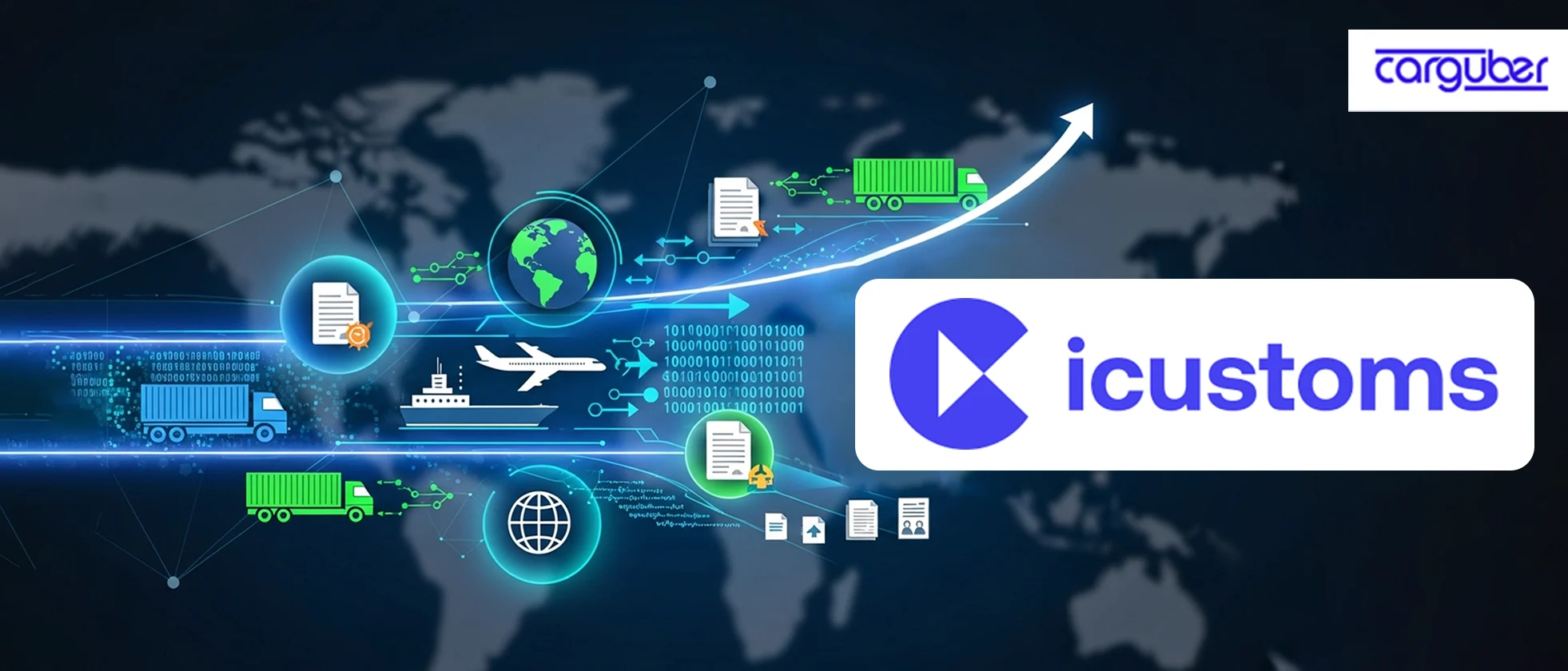
Here comes iCustoms, an AI-powered trade compliance platform that is transforming how freight forwarders manage customs processes. iCustoms transforms a challenge into a competitive advantage by leveraging sophisticated machine learning, astute document processing, and seamless integrations.
Increasing Complexity in Customs Compliance
Freight forwarders have traditionally used manual workflows to prepare customs declarations, validate tariff codes, and compile documentation. These methods include inherent risks:
- Errors caused by humans during data entry and classification
- Slow clearance cycles at borders
- Lack of real-time visibility into filings
- Repetitive tasks lead to high operational costs.
With trade volumes increasing and regulations constantly changing, the need for digital transformation in customs operations has never been more pressing.
iCustoms bridges this gap by combining advanced automation and compliance tools in a single platform. This shift is about more than just speed; it is about making intelligent decisions, adhering to regulations, and operating efficiently.
What is iCustoms, and Why does it Matter?
iCustoms is an AI-powered global trade compliance platform that automates, validates, and optimizes customs processes for importers, exporters, customs brokers, and freight forwarders alike.
At its core, iCustoms employs artificial intelligence and machine learning to convert unstructured customs and trade documents into structured, compliant data, thereby significantly reducing manual effort. The platform consists of several specialized modules tailored to different compliance requirements:
- Automatically extracts and validates data from trade documents
- iClassification: AI-assisted product classification using accurate HS/commodity codes
- Customs Management Tools: for declarations, duty calculations, and regulatory checks
- Specific Compliance Modules: like ICS2, ENS, NCTS, and other customs-filing components
These AI-powered tools collaborate to simplify the entire customs lifecycle.
Intelligent Document Processing — Eliminating Manual Slowdowns
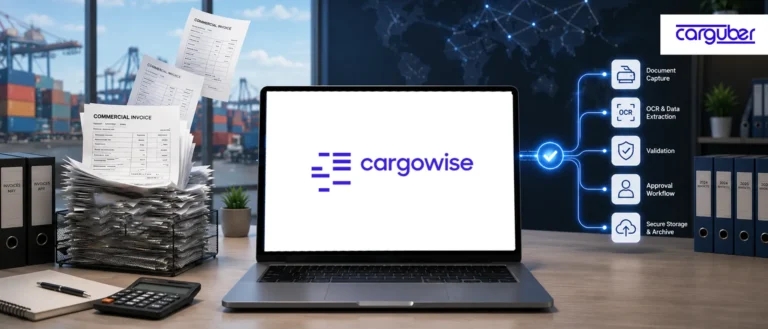
Handling a variety of trade documents, such as invoices, bills of lading, packing lists, and certificates of origin, is one of the most difficult tasks for freight forwarders. Traditional systems rely on manual data extraction, which is time-consuming and error-prone.
iCustoms automates this workflow through Intelligent Document Processing (IDP). It uses AI, machine learning, and optical character recognition (OCR) to:
- Extracts key data from any document format in seconds
- Maps extracted data to customs declaration fields
- Validates and verifies accuracy before submission
- Stores structured information for reuse in future filings
This eliminates the need for freight forwarders to spend hours copying and pasting data; instead, the system does it automatically and accurately.
By reducing manual labor, IDP significantly reduces processing time and increases compliance reliability.
Accurate Product Classification With AI
Correct product classification under global tariff schedules (such as HS/HTS codes) is critical; errors can result in shipment delays, penalties, and expensive rework.
iCustoms’ iClassification software employs artificial intelligence to automatically suggest accurate commodity codes based on product descriptions, allowing it to handle tens of thousands of products. It supports the following:
- Bulk uploads for large product lists
- Multi-country classification (32+ markets)
- Duty, tax, and landed cost suggestions
- Screens for restricted or controlled goods
This significantly reduces misclassification errors and ensures that freight forwarders submit the correct codes the first time.
Faster and More Reliable Customs Declarations
Automation is more than just extracting data; it also includes completing compliance tasks from start to finish.
With iCustoms:
- Customs declarations can be completed in minutes instead of hours
- Duty and tax calculations are automated
- Integrated regulatory logic ensures filings meet local and international standards
- Modules like ICS2 can generate compliant filings in under 90 seconds with high accuracy
This level of automation enables freight forwarders to submit declarations earlier in the shipment cycle, thereby reducing delays at borders or ports and improving delivery times.
Real-Time Compliance Checks and Error Detection
Compliance entails more than just submitting documents; it also includes adhering to changing local and global trade rules.
iCustoms integrates real-time regulatory checks into its workflows. The platform’s flags:
- Missing or inconsistent data
- Incorrect codes or values
- Regulatory inconsistencies based on destination requirements
By identifying these issues before submission, freight forwarders avoid rejections, fines, and costly delays, transforming compliance from a reactive to a proactive process.
Integration with Logistics ERPs and Operations Platforms
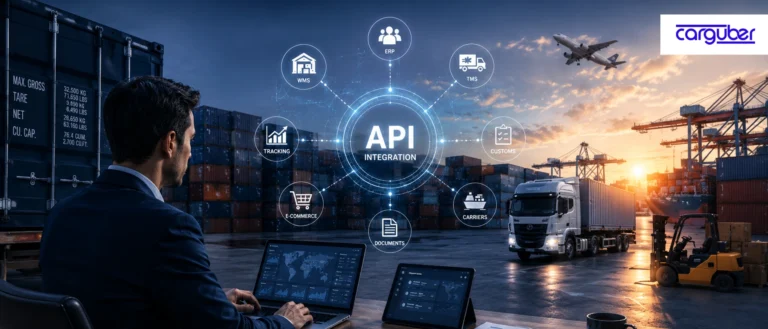
Modern freight forwarders use multiple enterprise systems to manage transportation, finance, warehousing, and customer service. One of iCustoms’ most significant strengths is its ability to integrate directly with these systems via APIs and structured data pipelines. Instead of treating customs compliance as a distinct workflow, iCustoms integrates compliance automation into the operational technology stack.
Integration transforms daily operations.
When integrated with logistics, ERPs, and transportation platforms, iCustoms enables:
- Automatic data transfer from ERP and TMS systems to customs declaration workflows.
- Real-time clearance status updates are pushed back into operational dashboards.
- Syncing financial data, such as duties and taxes, into accounting and billing modules.
- Centralized data governance ensures consistency in product, shipment, and regulatory data across departments.
Freight forwarders benefit from a unified operational environment by connecting customs compliance to core logistics systems. Teams in customs, operations, finance, and customer service all use the same validated data set.
This interconnected ecosystem:
- Eliminates information silos
- Reduces duplicate manual entry
- Improves cross-team coordination
- Aligns compliance workflows with transportation and financial operations
Instead of slowing down operations, customs compliance becomes a synchronized, automated extension of the freight forwarding workflow.
The Complexity behind iCustoms With Logistics Systems
At first glance, integrating iCustoms with logistics systems may appear simple: send shipment data to iCustoms and receive customs clearance updates in return. In reality, the process is much more complex.
Freight forwarders typically operate in a multi-system environment, with customs, operations, finance, and customer data managed on separate platforms. Each system has its own data structures, workflows, and validation logic, making accurate integration both technical and operational.
Customs data must be accurately mapped across systems to ensure:
- Consistent product, shipment, and party information
- Accurate declaration values, duties, and taxes
- Compliance with country-specific filing requirements
- Real-time visibility without data duplication or loss
Small differences in data formats can cause filing errors, rejected declarations, and clearance delays. The fact that freight forwarders use multiple platforms, each with its own data structures, APIs, validation logic, and security protocols, such as Microsoft Dynamics 365 for business process management, Oracle NetSuite and Xero for accounting and finance, and CargoWise for freight operations, adds to the complexity.
To be successful, iCustoms integration requires more than just API connectivity; it also necessitates a thorough understanding of logistics workflows, customs regulations, enterprise system architecture, and integration expertise.
Have You Prepared to Integrate iCustoms Fully into Your Logistics Ecosystem?
While iCustoms provides powerful automation and compliance intelligence, its true value is realized through expert system integration.
Carguber specializes in integrating iCustoms with complex logistics and enterprise platforms, ensuring that customs data flows accurately across freight operations, finance, and customer systems while minimizing disruption to day-to-day operations.
We enable freight forwarders to:
- Accelerate iCustoms implementation while lowering integration risk
- Ensure accurate data exchange across CargoWise, finance, and operations platforms.
- Maintain regulatory compliance while scaling globally
- Eliminate manual work and operational silos across customs workflows
Whether you’re modernizing customs operations or expanding cross-border trade, we can help you make iCustoms a fully integrated, future-ready compliance solution.
Conclusion
iCustoms is more than just customs software; it’s a digital compliance ecosystem that automates freight forwarding operations, eliminates manual delays, and leverages regulatory complexity for strategic advantage. However, the real challenge is integration. Customs data must align seamlessly with logistics, finance, and customer systems, where even minor mismatches can lead to delays and compliance risks.
Schedule a call with Carguber today to speed up your iCustoms implementation, minimize integration risks, and create a scalable, fully connected customs compliance ecosystem.