How are Electronic Bills of Lading in CargoWise Powering a New Era of Trade Documentation?
Global logistics is evolving at a rapid pace. Cargo moves faster than ever across oceans, borders, and continents.
Yet one thing continues to slow everything down: documentation.
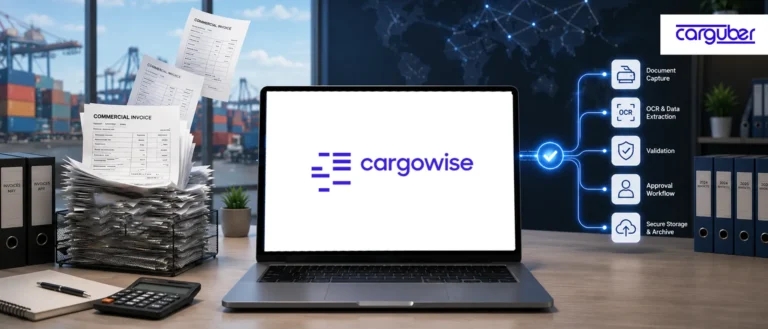
For years, the Bill of Lading (BoL) has been a paper-intensive process that relies on printing, signatures, and courier networks. Even today, shipments can arrive at destination ports while the original document remains in transit.
The gap between physical movement and document flow causes delays, costs, and operational friction. Electronic Bills of Lading (eBL) are changing that reality, and with CargoWise integrating eBL capabilities into its ecosystem, digital trade is no longer just a fiction. It is operational.
What is an Electronic Bill of Lading (eBL)?
An Electronic Bill of Lading (eBL) is a legally recognized digital equivalent of a traditional paper bill of lading. It performs the same core functions:
- Evidence of contract of carriage
- Receipt of goods
- Document of title
However, unlike paper BLs, eBLs are:
- Digitally issued and transmitted
- Cryptographically secured
- Instantly transferable between parties
- Fully trackable across their lifecycle
Within CargoWise, eBL capabilities are embedded directly into shipment workflows, enabling:
- Effortless receipt via integrated eBL providers
- In-platform document visibility and control
- Secure digital transfer of ownership
- Real-time lifecycle tracking
The eBL converts the bill of lading from a static document to a dynamic, real-time digital asset. This update directly integrates speed, control, and transparency into CargoWise’s workflow shipment processes.
Challenges with Traditional Paper-Based Bills of Lading
Paper-based Bills of Lading (BLs) remain widely used in global shipping, but they introduce inefficiencies that affect speed, cost, and reliability across the supply chain. As logistics operations scale, these challenges become more critical and harder to manage.
- Printing, signing, and couriering paper BLs delay cargo release and slow shipments
- Courier fees, printing, and manual handling increase operational costs
- Physical documents can be lost, damaged, or misplaced during transit
- Manual processes increase the risk of fraud, duplication, and tampering
- Data entry errors lead to compliance issues and shipment delays
- Lack of real-time tracking reduces visibility and slows decision-making
- Multiple parties handling documents create delays and miscommunication
- Paper usage and courier services increase environmental impact
- Growing shipment volumes make processes slower and harder to manage
Overall, paper-based BLs increase operational friction and reduce efficiency, making them unsuitable for modern, fast-moving supply chains.
How does CargoWise Drive eBL Adoption?
Logistics digital transformation is frequently delayed by one major issue: disconnected systems. Many solutions introduce new platforms, requiring teams to manage numerous tools, workflows, and processes.
CargoWise removes that complexity by embedding eBL functionality directly into its core platform. Instead of adding another system, it brings digital documentation into the same environment where shipments are already managed.
With integrated eBL providers, CargoWise enables teams to:
- Issue electronic Bills of Lading directly from shipment records
- Receive and process eBLs within existing workflows
- Handle both Master and House Bills of Lading digitally
- Monitor document activity across the entire process
This unified approach allows teams to transition to eBL without disrupting their day-to-day operations.
Enabling Secure Digital Exchange with Integrated Providers
To support reliable digital transactions, CargoWise connects with established eBL networks such as Bolero.
These integrations allow logistics providers to:
- Manage electronic Bills of Lading securely
- Transfer documents between stakeholders with full traceability
- Meet international compliance and regulatory standards
- Operate within a fully paperless document environment
CargoWise ensures that digital documents are not only faster but also secure and legally binding by leveraging trusted platforms.
Smarter Configuration for Smooth Processing
CargoWise increases usability by incorporating intelligent automation into eBL workflows.
Depending on the shipping instructions, the system can automatically assign the appropriate eBL provider.
- Carrier communication capabilities
- Customer or partner preferences
- Predefined operational rules
This reduces manual decision-making and lowers the risk of incorrect configurations, allowing teams to maintain consistency across shipments.
Supporting Both Digital and Traditional Workflows
While the industry evolves, not all partners are prepared for digital documentation. CargoWise accommodates this reality by providing flexible workflows.
When eBL is not supported by a counterparty,
- Documents can be converted into traditional paper format
- Digital and manual processes can run side by side
- Shipment operations continue without delays
This hybrid capability ensures that businesses can implement eBL at their own pace while maintaining service delivery.
Complete Visibility Across Document Lifecycles
One of the biggest advantages of eBL within CargoWise is transparency.
Teams gain full visibility into every stage of the document journey, including the following:
- Creation and issuance
- Transfer between parties
- Changes in ownership
- Final release and completion
This level of insight allows for faster decision-making, less uncertainty, and better operational control.
Getting Started with eBL in CargoWise
Adopting eBL entails more than just activation; it also includes structured onboarding and configuration.
CargoWise supports this transition through the following:
- Provider onboarding processes (such as Bolero registration)
- Configuring settings and workflows in a cargo-specific manner
- Set up of Shipping Instructions for digital documentation
- Training teams on updated processes
Once implemented, organizations can effectively manage master and house bills of lading in a fully digital environment.
Why is Switching to eBL No Longer Optional?
The logistics industry is rapidly shifting to digital trade. With increasing pressure from regulators, carriers, and global organizations, paperless documentation is becoming the norm rather than the exception.
Organizations that adopt eBL early will gain:
- Faster and more predictable shipment cycles
- Lower operational and administrative costs
- Enhanced customer satisfaction
- Improved compliance and reduced risk
- Stronger alignment with sustainability initiatives
Those who continue to use paper-based processes risk falling behind in an increasingly digital environment.
Making Your CargoWise Setup Ready for eBL
CargoWise is designed to support electronic Bills of Lading, but the true value lies in how well your system is configured to do so.
To get the full benefits of eBL, your CargoWise configuration must align with digital-first operations. This entails going beyond basic activation and creating workflows that enable effortless electronic document management.
Key areas to focus on include:
- Setting up digital document delivery to eliminate reliance on manual or courier-based processes
- Implementing milestone tracking to monitor each stage of the document lifecycle
- Automating workflows to reduce manual intervention and improve efficiency
- Integrating with eBL providers to enable secure and compliant document exchange
When these components are properly aligned, eBL becomes a natural part of your operations, simplified, scalable, and easy to manage.
But, without the right setup, organizations may not fully realize the potential of digital documentation.
Start Your eBL Journey with Carguber
At Carguber, we specialize in assisting businesses in switching from paper-based documentation to CargoWise workflows that are entirely digital. We facilitate a smooth and efficient transition by handling everything from system configuration and eBL provider integration to workflow optimization and team training.
Conclusion
Electronic Bills of Lading are not just an upgrade; they represent a shift in how trade documentation operates. They remove delays, reduce risks, and bring much-needed speed and transparency into logistics processes that have remained unchanged for years.
Adopting eBL offers CargoWise users the potential to update operations and maintain their competitiveness in a sector that is changing quickly. Carguber is here to assist you in spearheading the shift away from paperwork and toward a quicker, more effective logistics operation. Schedule a free call today!