How does the CargoWise-Customs4Trade CAS Integration Automate Customs Declarations and Ensure Accurate Compliance?
Did you know 80% of customs delays in global trade are caused by data errors, not logistics issues?
That is the reality that most freight forwarders and logistics companies face today. You may use a powerful system to manage your shipments, such as CargoWise, but when customs processes are manual or disconnected, delays, errors, and compliance risks occur quickly.
So the real challenge isn’t just moving freight; it’s ensuring that shipment data flows smoothly into compliant customs declarations with no friction. This is where the integration of CargoWise and Customs4trade CAS is critical.
What is Customs4trade CAS?
CAS declarations are a core module of Customs4trade’s Customs Automation System (CAS) that automates the creation, validation, and submission of import, export, and transit customs declarations for multiple countries. It functions as a centralized customs execution engine, converting shipment data into compliant, ready-to-file declarations while reducing manual effort, errors, and processing time from hours to minutes.
CAS Declarations achieves this through a combination of automation, compliance logic, and integration capabilities, which include the following:
- Automated generation and submission of import, export, and transit declarations
- Direct filing to customs authorities such as UK CDS and EU systems
- Rule-based validation for duties, taxes, and country-specific compliance requirements
- Integration with ERP, WMS, and logistics platforms like CargoWise via APIs or structured data
- Real-time visibility through dashboards, reporting, and status tracking
- Role-based data access and secure sharing across teams and partners
- Multi-country support within a single centralized platform
- Modular and scalable architecture that grows with business needs
- Continuous regulatory updates to ensure ongoing compliance
Overall, CAS Declarations converts operational shipment data into accurate, compliant customs filings, thereby increasing efficiency, lowering costs, and providing greater control over global trade operations.
What are the Benefits of CargoWise and Customs4trade CAS integrations?
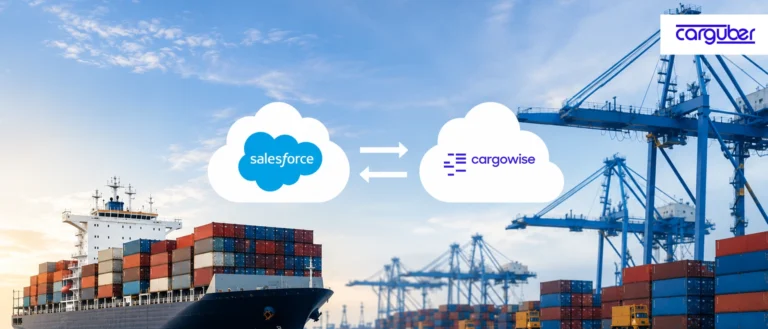
Integrating CargoWise with Customs4trade CAS is critical because it connects logistics operations and customs execution, resulting in a smooth, automated workflow from shipment creation to declaration filing. Without integration, businesses frequently rely on manual data entry, disconnected systems, or third-party brokers, increasing the likelihood of errors, delays, and compliance issues. Businesses can improve both speed and reliability by linking CargoWise (data source) and CAS (compliance engine) so that accurate shipment data flows directly into automated customs processing.
This integration is important for several key reasons:
- Eliminates manual data entry and reduces duplication across systems
- Improves accuracy by using structured shipment data for declarations
- Accelerates customs clearance through automated filing and validation
- Ensures compliance with country-specific regulations such as UK CDS and EU systems
- Provides real-time visibility into declaration status and shipment progress
- Reduces dependency on customs brokers, lowering operational costs
- Enables scalable operations for handling high-volume, multi-country shipments
- Aligns operational workflows with compliance requirements in a single connected process
Simply put, the integration converts fragmented customs processing into a connected, automated, and compliant workflow, allowing logistics providers to move shipments faster, reduce risks, and operate more efficiently in global trade environments.
How does CargoWise and CAS Integration Work?
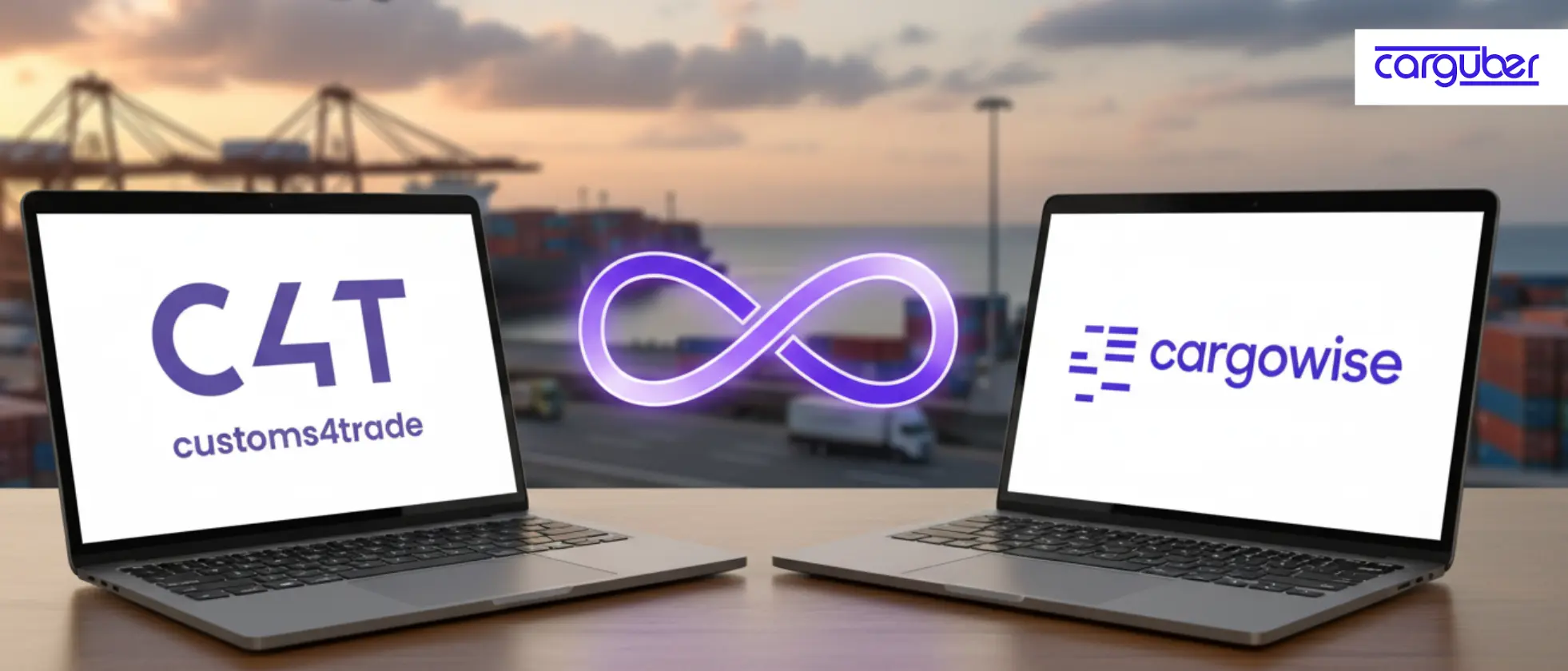
Integrating CargoWise with Customs4trade CAS creates a system-to-system data exchange layer that eliminates manual intervention and allows for automated customs declaration processing. This integration creates a continuous data pipeline in which operational shipment information is seamlessly fed into a compliance-driven customs engine, ensuring accuracy, speed, and regulatory alignment throughout the declaration lifecycle.
Here’s how it works from a technical standpoint:
Direct Data Exchange Between Systems
CargoWise serves as the source system, while CAS is the customs execution system.
- Shipment data is extracted from CargoWise
- Transferred via API / EDI / structured file (XML/CSV)
- Automatically ingested into CAS
This approach eliminates manual data duplication across platforms, resulting in a single source of truth and lower latency between operational updates and customs processing.
Structured Data Mapping and Transformation
CargoWise data fields are mapped into the CAS schema, such as
- Shipper / Consignee details
- HS Codes / Commodity data
- Invoice values and currencies
- Transport mode and routing
- Customs references
Mapping ensures data consistency and compatibility across systems, allowing for accurate transformation of operational data into customs-ready formats.
Rule-Based Data Enrichment in CAS
Once data is received, CAS uses pre-configured logic layers:
- HS code validation
- Duty and tax calculation rules
- Country-specific declaration requirements
- Customs procedure codes
CAS functions as a compliance engine rather than just a data receiver, dynamically enriching data based on regulatory frameworks and predefined business rules.
Validation and Error Handling Layer
CAS conducts validation tests before submission:
- Missing mandatory fields
- Incorrect formats
- Regulatory mismatches
If errors are detected:
- Exceptions are flagged
- Sent back for correction
This prevents invalid submissions to customs authorities and ensures that only compliant, validated data is filed.
Automated Filing via Customs APIs
CAS communicates directly with customs authorities such as,
- UK CDS (Customs Declaration Service) System
- EU customs systems
- Declarations are submitted via government API endpoints
- Filing happens in near real-time
This eliminates the need for manual filing or broker intervention, resulting in significantly shorter turnaround times and faster clearance.
BI-Directional Status Synchronization
CAS returns response data to CargoWise:
- Declaration accepted/rejected
- Clearance status
- Error messages
Updates are automatically reflected in CargoWise workflows, allowing operations teams to track customs status without leaving the core system.
Master Data Synchronization and Reusability
CAS maintains centralized master data.
- Commodity codes
- Duty rates
- Compliance references
This data can be:
- Reused across multiple declarations
- Synced with CargoWise, if configured
This ensures that data models are standardized and reusable, which improves consistency and reduces the need for repetitive configuration.
Event-Driven Workflow Automation
Integration can be configured as event-triggered.
- Shipment created → triggers declaration
- Shipment updated → triggers validation
- Departure/arrival → triggers filing
This allows for real-time, automated customs workflows that are aligned with shipment lifecycle events.
Secure and Scalable Integration Architecture
- API-based secure communication (REST/SOAP)
- Data encryption during transfer
- Scalable for high-volume transactions
This makes the integration suitable for enterprise-level logistics operations that require large-scale, multi-country declaration processing with high reliability.
Summary
CargoWise: Data Source (Operational System)
Customs4trade CAS: Processing Engine (Customs Automation)
CargoWise and Customs4trade CAS Integration: Data Pipeline + Validation + Filing + Feedback Loop
The integration converts operational shipment data into validated, compliant customs declarations via an automated, rule-driven pipeline, ensuring global trade operations’ efficiency, accuracy, and scalability.
Why Carguber Experts are Required for End-to-End CargoWise and Customs4trade CAS Integration?
Integrating CargoWise with Customs4trade CAS entails more than just connecting two systems; it also requires aligning operational data, customs compliance logic, and workflow automation throughout the shipment lifecycle. Even after integration, businesses may still encounter issues such as incorrect declarations, data mismatches, delays, and compliance risks if the proper configuration is not in place.
Carguber plays an important role here. Carguber, a marketplace for CargoWise users and freight forwarders, connects logistics companies with the right experts who understand both CargoWise and logistics operations and customs automation platforms such as CAS, ensuring a smooth and effective end-to-end integration.
We add value to the integration process by
- Structuring and standardizing CargoWise data for accuracy
- Managing field mapping between CargoWise and CAS
- Configuring workflows and automation triggers
- Ensuring compliance rules are correctly applied
- Conducting end-to-end testing before go-live
- Optimizing performance for high-volume operations
- Providing access to specialized integration expertise
To put it simply, we ensure that the integration is not only technically complete but also fully optimized, compliant, and operationally effective. This enables businesses to speed up customs processing, reduce errors, and gain complete control of their global trade workflows.
Final Words
Customs is no longer a separate, manual process, but rather an integrated, automated component of logistics operations.
Businesses that integrate CargoWise with Customs4trade CAS can reduce inefficiencies, improve compliance, and speed up cross-border movement. To reap the full benefits, the integration must be done correctly.
If you want to simplify your customs processes and make your CargoWise system more efficient, now is the time to research the best integration strategy. Schedule a free call with us today to improve your CargoWise and Customs4trade CAS integration and gain control of your global trade operations.