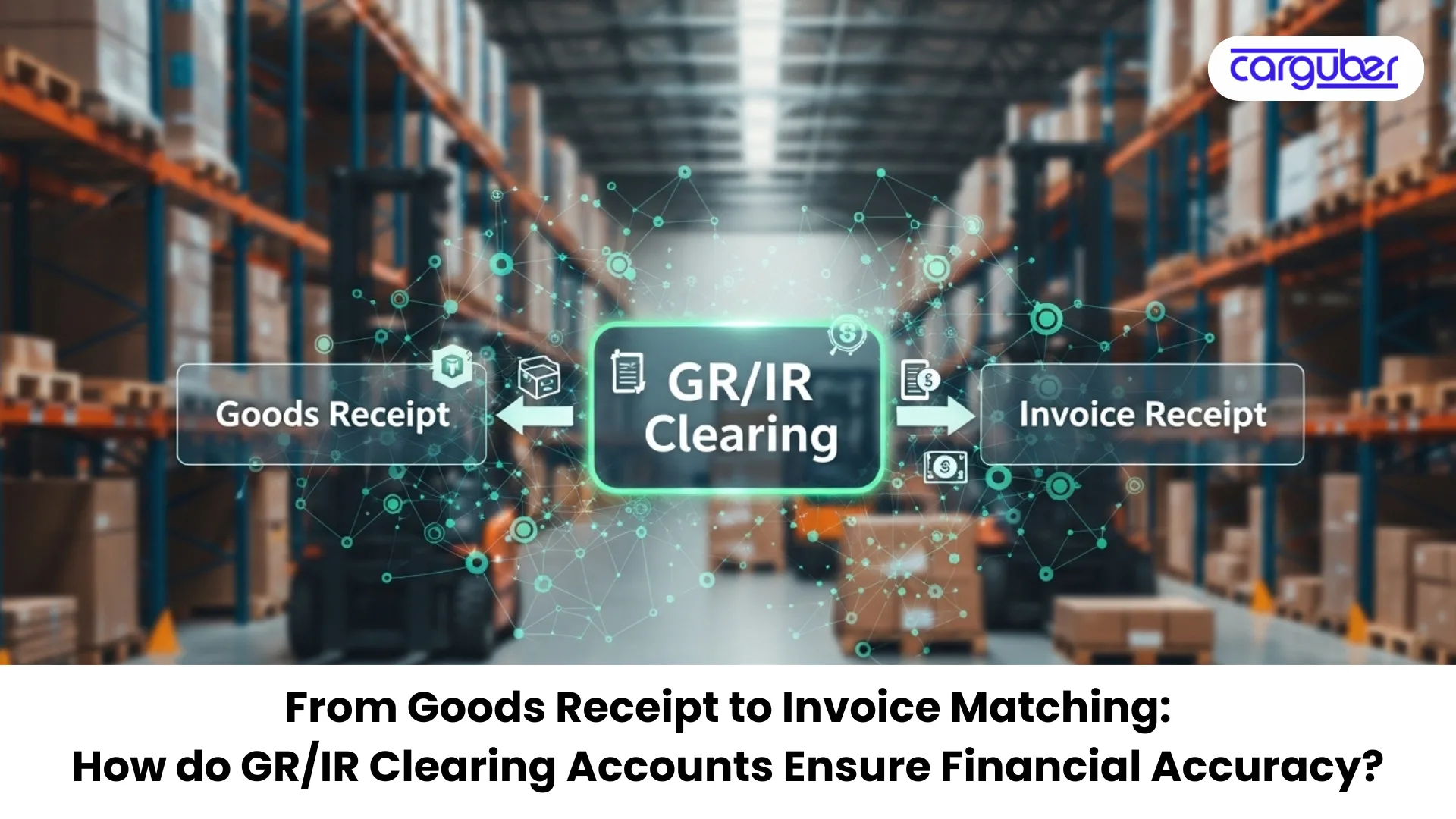
You receive goods from a supplier. The shipment is completed, and everything looks fine operationally.
But then the invoice arrives.
And suddenly, things don’t match.
Now your finance team is looking into records, operations is double-checking details, and valuable time is being spent on something that should have been simple.
Sound familiar?
If you work with high-volume procurement systems like CargoWise, SAP, Oracle ERP Cloud, or NetSuite, timing mismatches are common; they are part of your daily workflow.
And without a proper GR/IR (Goods Receipt / Invoice Receipt) structure, these mismatches do not remain isolated.
They accumulate quickly, transforming routine reconciliation into a time-consuming challenge as the period closes.
Understanding GR/IR Clearing Accounts
Accuracy is important in all businesses, not just logistics and supply chain finance.
As businesses grow and transaction volumes rise, even minor discrepancies between goods received and invoices can lead to bigger problems, such as delayed payments, inaccurate financial reporting, and time-consuming reconciliation.
This is why GR/IR clearing accounts are increasingly important in modern ERP systems.
A GR/IR account serves as a financial bridge between operations and finance.
- 📦 Goods received (operations)
- 💰 Invoice received (finance)
It ensures that financial entries are recorded even when goods and invoices arrive at different times.
More importantly, it serves as a control mechanism, helping businesses ensure that what is received and what is billed are properly aligned.
This level of control is critical in a high-volume, fast-paced logistics environment for ensuring financial accuracy and operational confidence.
📊 Why is GR/IR Gaining More Attention Today?
Recent trends in logistics finance indicate a clear shift toward tighter financial controls and automation.
Businesses are now focusing on:
- 📈 Improving invoice accuracy and reconciliation speed
- ⏱️ Reducing delays between operations and finance
- 🛡️ Strengthening audit and compliance processes
- 👁️ Increasing visibility into outstanding liabilities
Why does this matter?
Finance is no longer separate from operations; it is inextricably linked to them.
And when that connection breaks, the consequences are immediate.
📉 Where do Most Businesses Run into Trouble?
Even with ERP systems in place, many businesses continue to face GR/IR challenges.
Here’s what typically happens:
- 📦 Goods are received, but invoices arrive later or with differences
- 💰 Pricing mismatches create confusion during reconciliation
- 🔁 Finance teams spend time manually matching transactions
- ⚠️ Unresolved entries sit in the system without clear visibility
Over time, this leads to:
- ⏳ Delayed payments
- 📊 Inaccurate financial reporting
- 🧾 Increased workload for finance teams
- ❌ Reduced trust in system data
And the most challenging part?
These issues frequently go unnoticed until they have an impact on cash flow or audits.
🔍 What does a GR/IR Clearing Account Actually Solve?
A well-managed GR/IR clearing account bridges the gap between operations and finance.
It ensures that goods and invoice receipts are tracked, matched, and validated within the system.
When used properly, it can help you:
- 🔎 Identify mismatches between received goods and invoices
- 📌 Track outstanding liabilities with clarity
- 📈 Improve financial accuracy and reporting
- ⚙️ Reduce manual reconciliation effort
- 🤝 Maintain better control over supplier transactions
Simply put, it ensures that your financial records match your operational reality.
🚀 How do High-Performing Teams Differ?
Companies that effectively manage GR/IR do more than just rely on the system; they also optimize its use.
They focus on:
- ⚙️ Accurate configuration of financial workflows
- 📊 Real-time visibility into GR/IR balances
- ⚡ Faster identification of mismatches
- 🔗 Better coordination between operations and finance
- 🤖 Reducing manual intervention wherever possible
This approach enables them to maintain control, reduce errors, and improve financial transparency.
Importance of GR/IR Clearing Accounts
In today’s logistics context:
- 📉 Margins are tighter than ever
- 💸 Cash flow visibility is critical
- 📜 Compliance requirements continue to increase
This means:
You cannot afford discrepancies between what you receive and what you pay.
Even minor inconsistencies can quickly escalate into significant financial risks.
🚀 Final Thoughts
GR/IR clearing is more than just an accounting function; it’s an essential component of operational control.
When properly managed, it ensures that your financial data accurately reflects what’s going on in your business.
Need assistance simplifying financial workflows?
If your GR/IR process remains unclear or time-consuming, it may be time for a closer look. Get the right logistics support and help desk to help you automate financial workflows, improve visibility, and ensure that your operations and finances are completely aligned so your team can focus on what really matters.